
Here we are, only in April, sat before what is doubtlessly the most divisive film of 2026. Last December, an incredibly tight marketing campaign for The Drama began with a save-the-date mock engagement announcement planted in the Boston Globe. A trailer followed, quashing any assumptions – as misplaced as they might have been considering both production company and cast – of a happy romcom. Most impressive however was its ability to keep the intrigue quiet for so long, so much so that many went in blind (myself excluded – I happened upon an article in The Guardian days before its release) and were forced to confront it in real-time. The so-called “twist” – it’s a revelation, really – is at the very heart of The Drama’s controversial nature: complaints ensued, labelling it distasteful, insensitive. Others meanwhile praised it for its quick wit and daring treatment of such a delicate topic. Nonetheless, whatever The Drama is, it’s certainly got everyone talking about it.
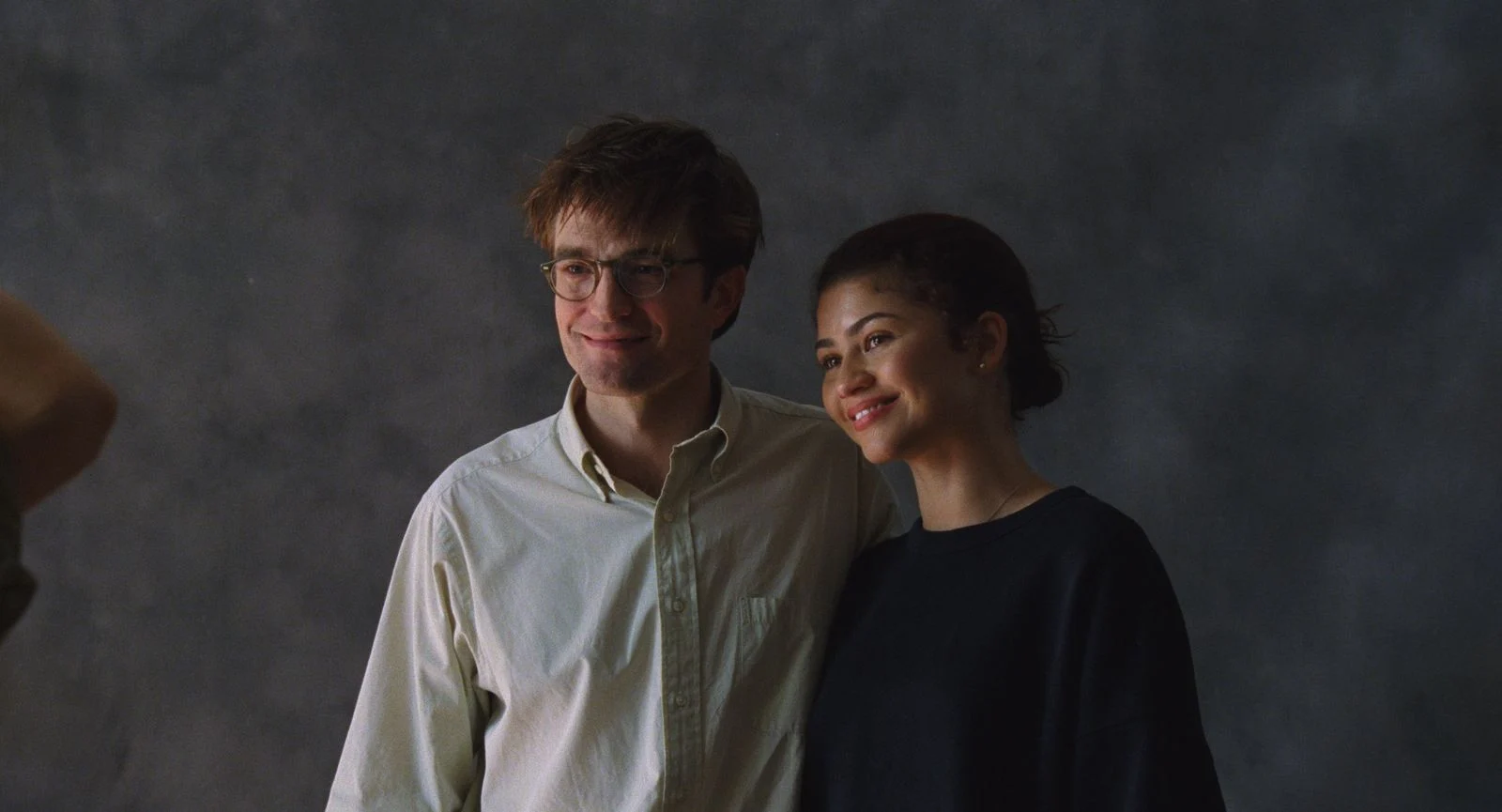
An almost too happy montage sees Charlie (Robert Pattinson) and Emma (Zendaya) preparing for their wedding as the former writes his vows, covering everything from how they met to his wife-to-be’s “revolting” laugh (not to worry though, he finds it endearing). The conversation is good, the sex is good – everything is, quite literally, sunshine and rainbows. That is, until a party game with fellow couple Rachel (Alana Haim) and Mike (Mamoudou Athie) goes horribly wrong. When asked about the worst thing she has ever done, Emma drunkenly reveals something that disturbs Charlie so deeply it throws the whole wedding into disarray. With only a few days to go until the big day, Charlie and Emma grapple with this revelation, both together and separately, in an effort to make sense of what is acceptable – and what isn’t.
With The Drama, Kristoffer Borgli has created something twistingly entertaining, raising the question that has probed modern society time and again – can one laugh about everything? According to the screening I was in, the short answer is yes. It is certainly dark to do so, and there is of course something to be said about a certain insensitivity (Borgli is after all a Norwegian bringing a European perspective to a very American issue). Yet The Drama’s message and background commentary is just too spot on to ignore or render offensive – this is because it does not focus on the action itself, but on the intent, the “guilty mind”, also a strikingly American train of thought. Is someone truly bad if they have only thought an action? It feels fitting that out of all characters, the very British Charlie should be the only one to even attempt to understand Emma, or get to the bottom of her reasoning – others, particularly the very hateable Rachel, are quick to demonize her, chastise her for only what could have been. The line here is thin, one that Charlie desperately tries to make sense of – how close did she come to committing? And yet Emma is, really, the only character who does not act at all – this is a shame from a script perspective, as Zendaya is not given much to work with beside the occasional blabbering and less occasional projectile vomiting, but it nevertheless serves the messaging well. The Drama is a film about the judgement we have of others, the ways in which people are distorted if we find out just a little too much about them. In a clever symmetry, Charlie and Emma happen upon their DJ smoking heroin in the street – Charlie is intent on firing her, and while Emma is at first reticent, her opinion slowly morphs as the wedding gets closer and the ruling against her grows. Meanwhile, in his desperate attempts to cast visions out of his mind and understand his fiancé, Charlie drives himself virtually insane, revealing his true colours in the process – this is brilliant, jittery acting from Pattinson, and though Zendaya is admittedly underused (she becomes a sort of haunting statue, a Pandora’s box of horrifying secrets to Charlie’s manic efforts to keep it together), they bounce off of each other remarkably well, communicating via the tiniest of moves and flitting glances. There are some delightfully cringe-worthy moments here, so adept that one cannot help but recoil, and the flow and editing from Joshua Raymond Lee and Borgli himself is top tier, a mashup of flashbacks and Charlie’s reconstituted visions – nevertheless, it’s almost too neat for such a messy story, as is no doubt the ending, a wrapped up bowtie of a resolution that leaves one strangely cold. Cinematic history has seen its fair share of messy couples finding a way, but for a film named The Drama, never has an ending been tidier.