
The world of cinema certainly isn’t short of films about men overwhelmed with obstacles of late. There was Paul Thomas Anderson’s One Battle After Another first, and Leonardo DiCaprio’s jittery, drug-fuelled Pat Calhoun. Then came Josh Safdie’s Marty Supreme, in which Timothee Chalamet climbed his way to table tennis stardom, virtually destroying all of New York City in the process. Perhaps adding Park Chan-wook’s No Other Choice to this triad is doing it a disservice though, as virtuous as these films are – the fact remains that it is a fundamentally different type of film, quieter, less subject to fanatical buzz and following. Nevertheless, the crux and running thread of it feels more and more familiar – that of a man, battling with the existential weight of being.
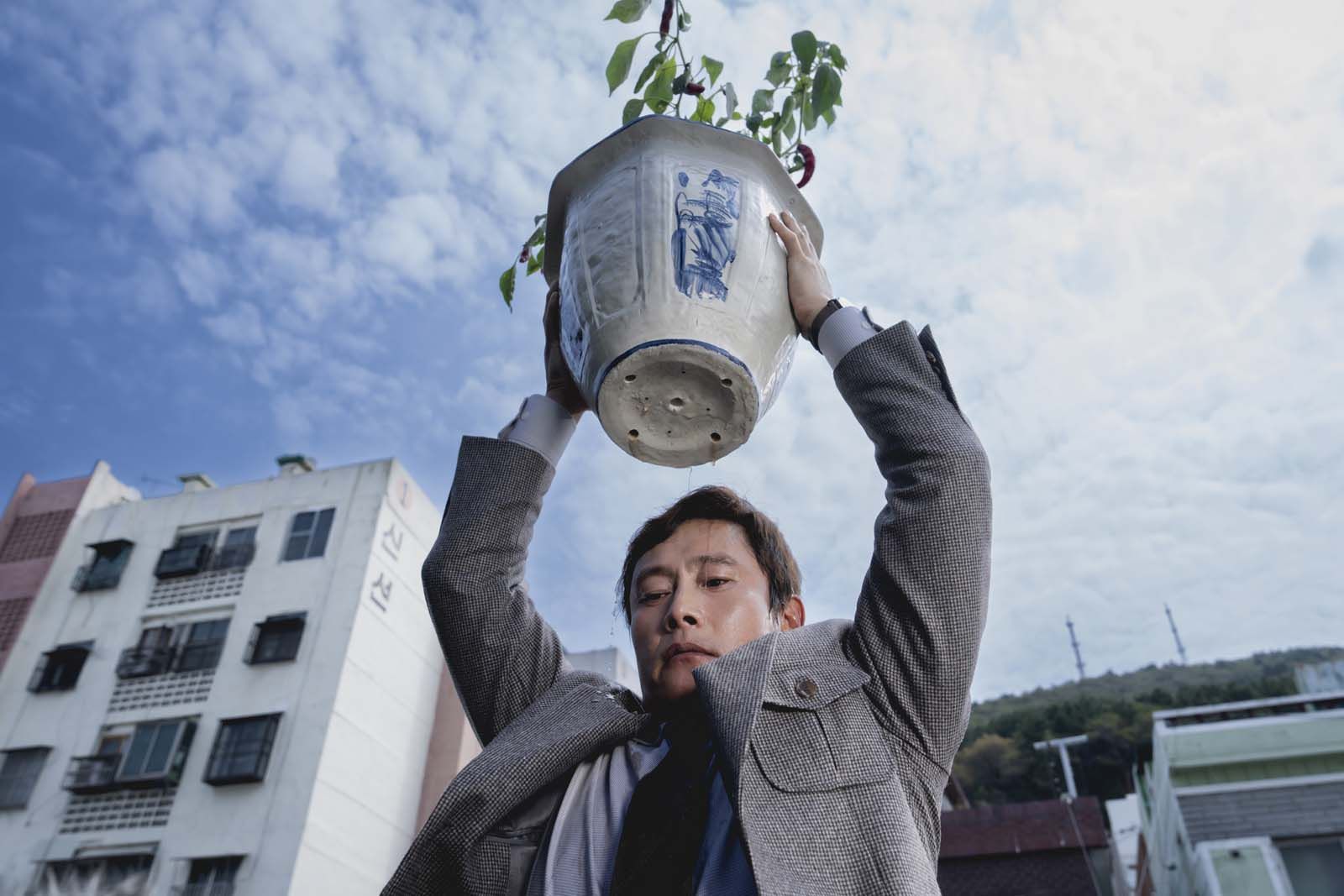
Lee Byung-hun is hysterical as Man su, an award winning veteran employee at a papermaking company with the perfect life – the childhood home he has purchased and spent years making his own, a loving wife and two children, labradors. The real deal. But when Americans buy his company out and he is fired after objecting to the downsizing, a very different reality presents itself, one in which idyllic home and family are threatened by the consequences of unemployment. His wife must reprise work as a dental hygiene assistant, while a friend of the family considers buying the house – in one scene, he suggests knocking down Man su’s carefully crafted greenhouse to make more space. Amidst this turmoil and a series of manual jobs, Man su finally secures an interview at a papermaking company. But up against the best of the best, he realises there is only one solution that presents itself to him – killing all those competitors who stand in his way.
Chan-wook is perhaps one of the most creative visual directors working today, and No Other Choice serves only as a testimony to this. His choice of camera movements is so seamless and yet so original that the mind almost cannot comprehend until the scene has come to an end – these are perspectives that an audience may be deeply unaccustomed to. His use of sound and music is also particularly exciting, especially during a fight scene to Cho Yong-pil’s Redpepper Dragonfly as Man-su – loudly – invades one of his competitors’ homes. Byung-hun plays this desperation with gusto – at times, it is unclear which direction he will take, simply because he himself is not sure. Clearly, serial killing has never been on the cards for him. But as he says, and as the Americans say when they fire most of the employees, there is no other choice. Of course, Chan-wook is quick to fire back – there always is. The problem is that sometimes, people are so desperate they cannot see it. Things are not always as they seem in No Other Choice, as Man-su’s beautiful greenhouse becomes home to dastardly deeds and a wife’s well-meaning fancy dress costume is interpreted as an attack on her husband. Perhaps there are a few too many subplots that draw away from the main storyline – then again, this only adds to the paranoia, and the sense that Man-su is well up over his head in toothaches and criminal charges against his son (on top of his not so cunning scheme). Shockingly, No Other Choice still manages to be disturbingly funny – a scene in which Man-su drives away after a failed assassination attempt is so hilarious that it takes a split second to realise that we are, in fact, laughing both with and at him. Despite an impressive storyline, this grizzly dark comedy does overstay its welcome, and there is a certain sense of apathy coming out of it despite its obvious technical merit and performances – but at the same time, this is also a film about the tiredness of life. There is no other choice, certainly, but there is also no other opportunity, as Man-su grapples with a dying industry and the end of an era. Perhaps, then, this is where the real tragedy of it all lies.