
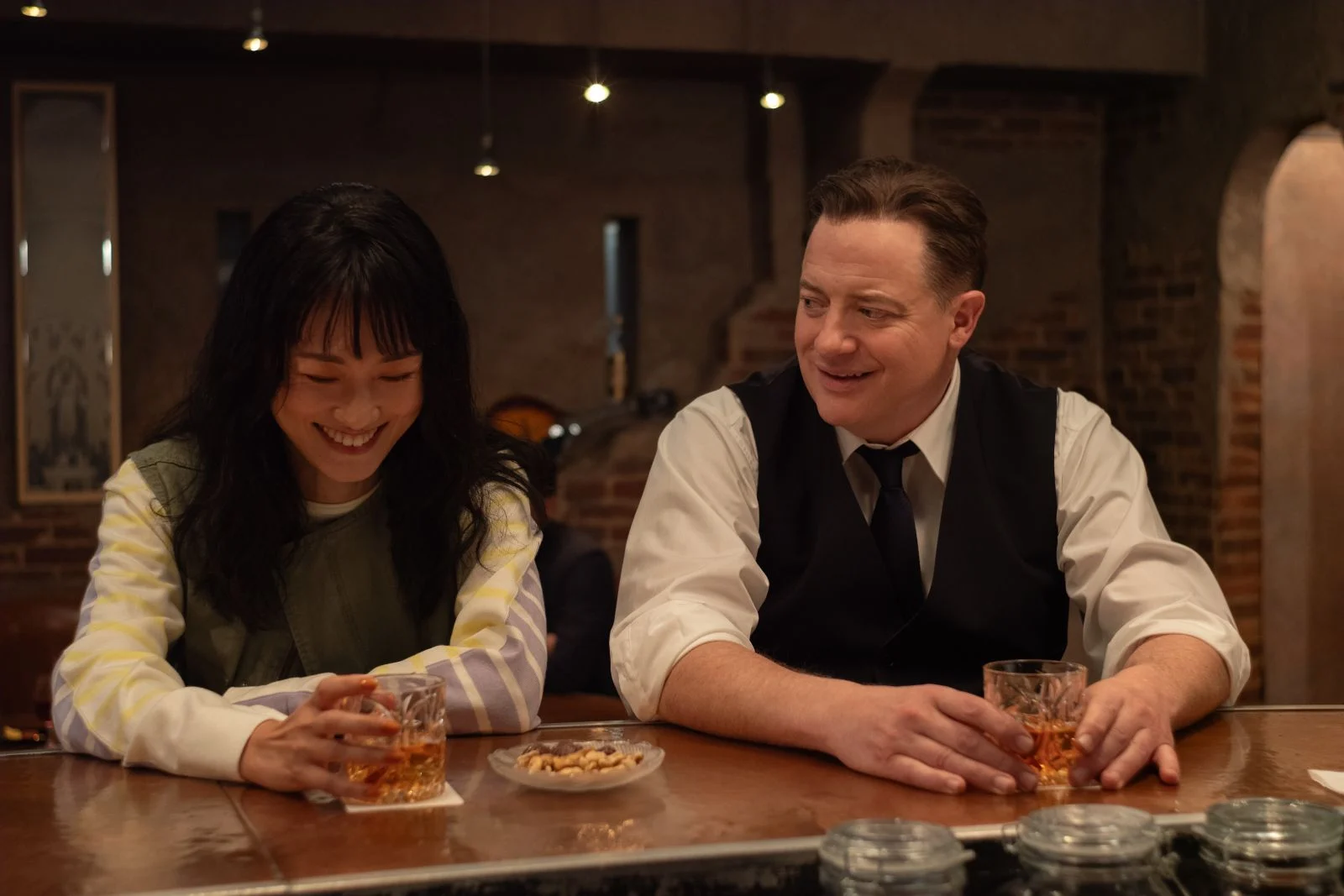
Brendan Fraser returns to the big screen with a somewhat different take on family drama since his 2023 comeback The Whale with Hikari’s Rental Family, a saccharine take on the real life service offered in Japan since the nineties. It’s an enjoyable two hours, with Fraser providing a satisfactory performance as a washed-out actor lost in Tokyo, but overall, Hikari and co-writer Stephan Blahut’s script is just too safe to have much impact.
Following a successful toothpaste commercial for which he is still recognised, Phillip Vanderploeg has never left Tokyo, and is still on the lookout for work seven years later. After a series of minor roles, he is hired by Shinji (Takehiro Hira), who runs Rental Family, a service that provides actors to play stand-ins for family members and friends. At first hesitant to be untruthful and engage in very real scenarios with very real people, his coworkers, particularly Aiko (Mari Yamamoto), help him understand that he is doing a good thing, for willing – and paying – clients. Phillip enthusiastically takes on two long-term jobs – in one, he plays estranged father to a half-Japanese girl Mia (Shannon Mahina Gorman), whose mother needs help getting her enrolled into a private school, and who believes that their application would be improved if Mia herself thought her father had returned. In the other, he is a journalist hired to write about retired actor Kikuo Hasegawa (Akira Emoto), who suffers from dementia. Suddenly, Phillip’s lonely life in Tokyo is filled with excitement and connection – but it isn’t long before he begins to merge fabrication and reality.
Hikari treats topics of loneliness and desperation with gentility and tact, and Fraser in this sense is the perfect protagonist with his soft-spoken voice and alert puppy eyes. It is hard not to feel for him, a failed actor in the middle of a foreign crowd, who finally finds his calling and a sense of purpose. He is moving, certainly, navigating this tricky boundary with difficulty, but the overall narrative is too sweet to provide any true emotion beside the occasional watery eye. At times, Rental Family feels like a well thought out advert, a sequence of scenes put together for maximum “aww” impact. Everything about it is safe, especially the clients that Phillip must interact with – a daughter in need of a father, representing the family that he has missed out on (naturally, Fraser gives off airs of girl’s dad) in his quest for fame, and an old man with a dying wish, symbol of both friendship and regret. As lovely as these relationships forged are – and as predictable as their downfall – secondary characters like the lonely man who hires Phillip to play video games with him or the men who hire Aiko as a mistress to apologise to their wives, get to the grittier, more disturbing side of rental families. Both are needed of course, as Phillip must come to terms with the real impact he has had on both Mia and Kikuo’s lives (though he never reveals to Kikuo who he is, somehow maintaining the lie despite everything), but it is strange that Hikari, who co-wrote masterpiece limited series Beef, opted for such a low risk script. Despite its many soothing attributes, Rental Family has none of Hikari’s other work’s bite.