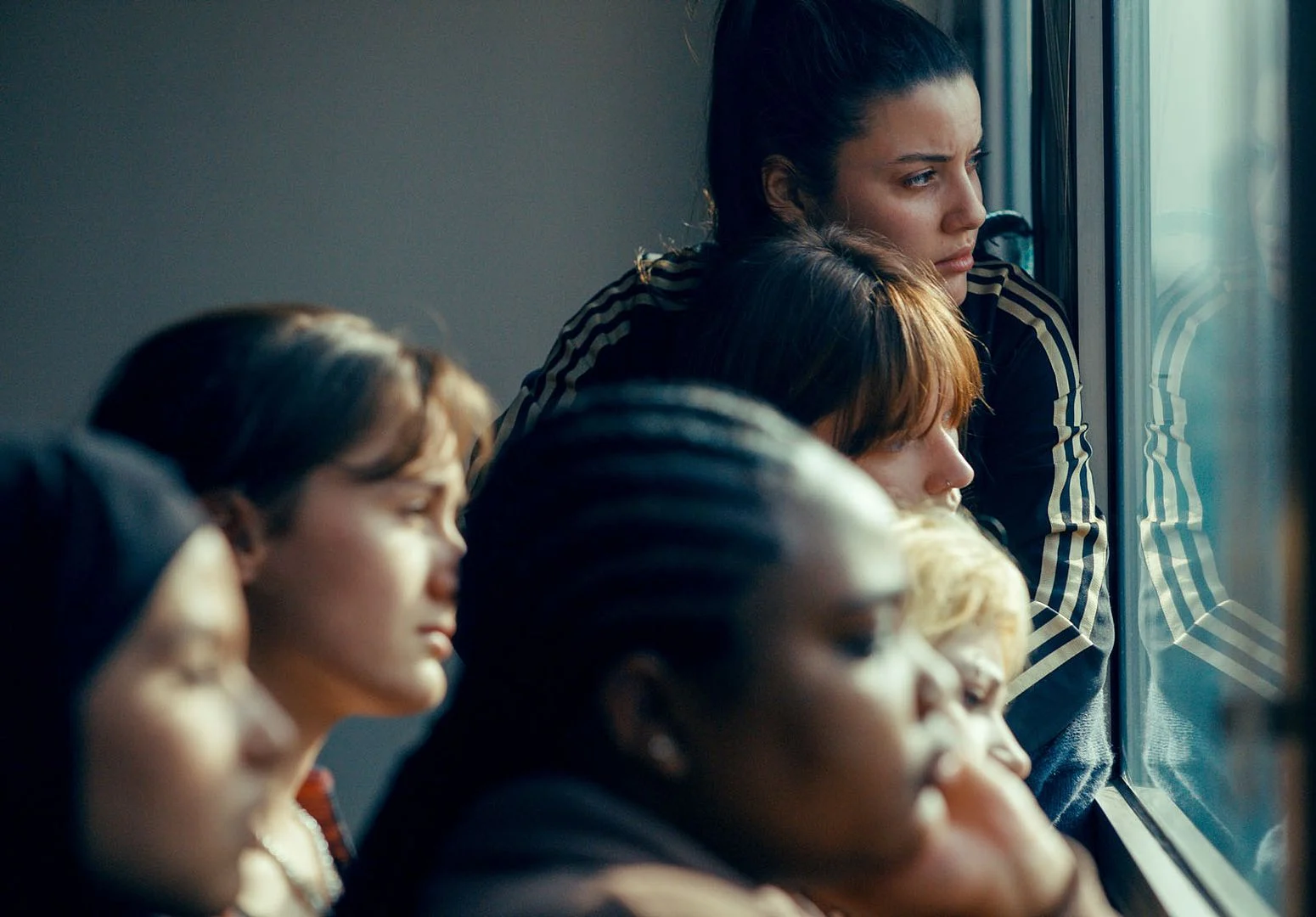
Cédric Kahn writes, directs and stars in his moving 15/18 (or, A Place to Heal), a social drama that at times verges into documentary territory as it tracks the lives of a group of teenagers recovering in a hospital’s psychiatric ward. I’ve long said that modern French cinema is particularly apt at portraying the trials and tribulations of bureaucracy and system involvement, be it court cases (Justine Triet’s Anatomie d’une Chute), adoption (Jeanne Herry’s Pupille), or custody wars (Xavier Legrand’s Jusqu’à la garde). With A Place to Heal, Kahn explores adolescent mental health, placing us at the heart of the ward, weaving a complex and delicate storyline amongst a series of at times deeply voyeuristic therapy sessions and parent meetings.
At a first glance, many will reconcile this piece with Laurent Cantet’s The Classroom (Entre Les Murs), but those keen to experience something even more akin to Kahn’s latest will find the answer in Emmanuelle Bercot’s La Tête haute and Jean-Xavier de Lestrade’s 3 x Manon, both excellent case studies in teenage rehabilitation. Kahn takes the backseat on acting duties as the head of the ward, Étienne, handing the baton over to the three central teens – Lucia (Malou Khebizi), who in the opening scene is re-admitted after running away from home, and who has a history of abuse, sex trafficking and gang rape; Eloïse (Zoé Monpart), recovering from an eating disorder sparked by a traumatic event she refuses to discuss; and Enzo (Kenji Peyran), a newcomer three weeks away from his eighteenth birthday who is admitted after stabbing an assistant at his foster home and who the doctors believed simulated suicide to avoid prison. These are children who are honest and real and seemingly unfazed by extreme violence – when Enzo tells Lucia about the stabbing for instance, she takes a puff of his cigarette and guffaws. Yet, these are also children, who are deeply, deeply troubled, incapable of regulating their emotions and in desperate need of attention – in this respect, Khebizi, Monpart and Peyran are all excellent in their roles, natural performers who are able to cater both to the vulnerable and aggressive sides of their characters. Though equally moving, the staff are less of a focus, their calm demeanour and lack of hesitation serving as a testimony to the difficult personalities they deal with on a daily basis – Antoine de Foucauld as fresh intern Jules is the outcast here, a foil for them as he struggles in his first therapy session and blushes when the girls tease him.
Perhaps it is that some of the characters fall by the wayside in A Place to Heal – at an hour and forty five minutes’ runtime, one cannot delve into each and every teenager and staff members’ psyche, and we are given neither flashbacks nor homelives to work with, the crux of the narrative kept to the ward in almost its entirety, bar for the final fifteen minutes, which lend the film an excellent, surreal quality. At times, it is as though the group operates as one giant force, indiscernible from each other, each contributing to a common cause – portraying the process of recovery. Via these in-depth character studies, whether during talking therapy or theatre work, A Place to Heal little by little paints the various routes to rehabilitation, pointing out tools as well as hindrances. One might posit that parental support is a particularly potent medicine, as is the case with Marvin (Daoud Gary), who we see in two or three sessions with his parents, good, concerned people who tell the doctor that they are worried and their son that they love him. It is no surprise when he is discharged – yet, so is another girl on the same day, returning to a home with no apparent ties to her parents. With this, A Place to Heal tentatively posits that there is no right or wrong way.
15/18 (A Place to Heal) screened at the London Film Festival and will next screen at the French Film Festival in South Kensington.