In honour of Halloween, we asked our writers to talk about their favourite horror film. From 90s classics to body horror, werewolves to haunted houses, these are the what about birdy team’s top picks. Enter at your own risk!
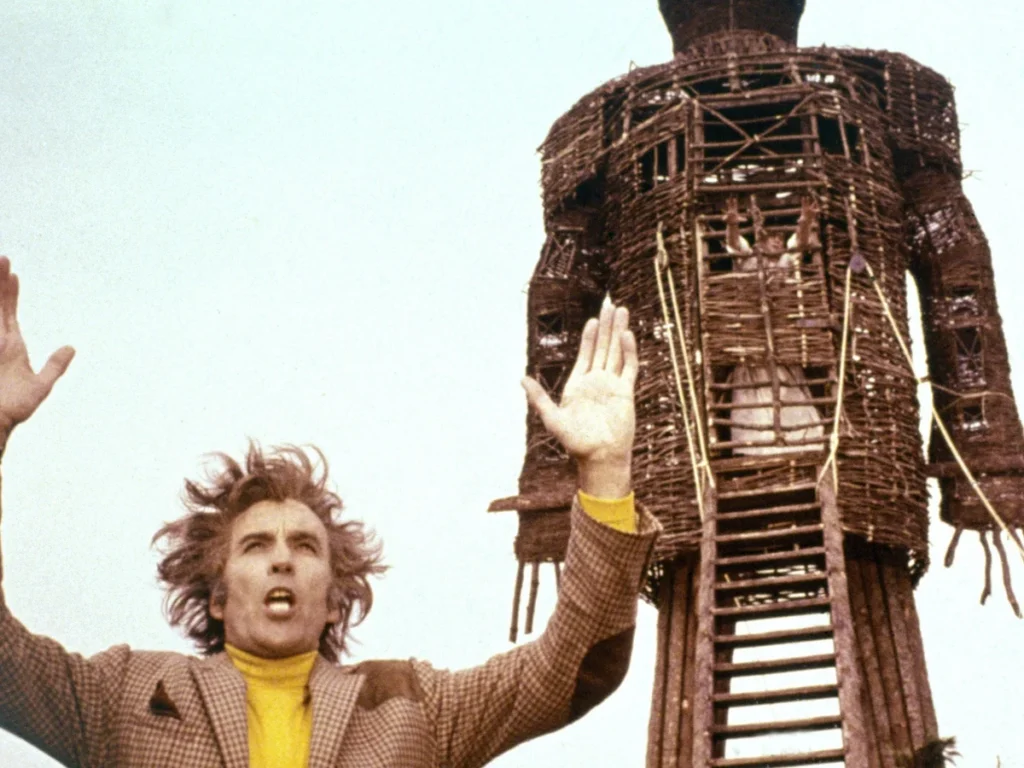
The Wicker Man (dir. Robin Hardy, 1973)
When I was 23 I went interrailing after finishing my drama school Musical Theatre MA course. As I was lying in the bunk of a very uncomfortable sleeper train, barrelling its way from Paris to the city of Briançon, I felt a bizarre urge to watch a freaky and unsettling horror movie from the 1970s. For some strange reason, my mind settled on Robin Hardy’s The Wicker Man. And I’m glad it did. Upon watching it for the first time, I was struck by the tranquillity of the Scottish location – the beautiful coastal island of Summerisle with its rolling hills, gorgeous buildings, and rustic manors – and by how fascinating and ultimately dread-inducing it is as the film gradually reveals the maliciousness behind every single one of the residents. Additionally the musical theatre graduate in me was drawn to the impromptu musical numbers thrown in throughout. This is 100% a musical film, and the Maypole song will always be a classic. Terrific performances, especially Christopher Lee and his stunning mustard jumper, and arguably one of the best scripts of all time – it’s no wonder he said it was the best role he ever did. It is, truly, my favourite horror ever – so much so that I watched it again immediately after finishing it.
Sam Winner
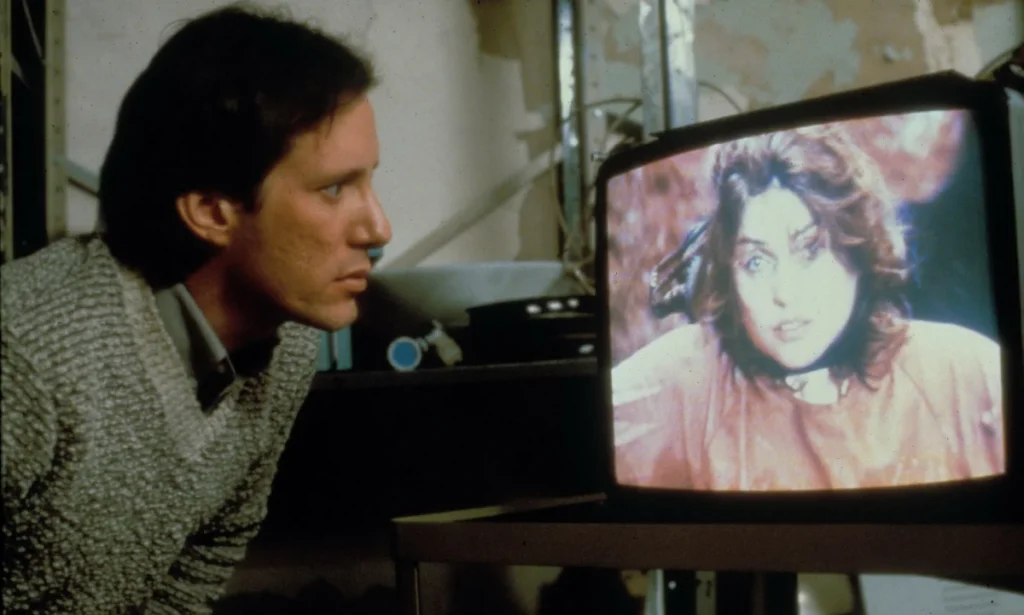
Videodrome (dir. David Cronenberg, 1983)
David Cronenberg’s Videodrome is admirable for a number of reasons. The most obvious of such reasons is its demented viscerality, namely in the practical effects department. Whilst by no means unique in Cronenberg’s wider oeuvre for its copiously weird gore (being as he is a body horror Godfather of sorts), Videodrome may just boast some of the most iconic instances within the director’s canon. Grimy protagonist Max Renn’s TV set undulating with lustful sighs, exposing pulsating veins as he caresses its frame, whilst on the screen a facsimile of Debbie Harry’s (y’know, from Blondie (?!?)) Nicki Brand beckons him into the embrace of a distended pair of digital lips, is a sequence as gloriously disgusting as it is legendary. Such a moment is but one of legion grotesqueries Cronenberg facilitates, but the beauty is in how he marries this pulpy depravity with prescient philosophising on the role that screens will go on to play in the neo-liberal world to come. I love that I can enjoy Videodrome for its sickening spectacle whilst also feeling rewarded for intellectualising about it in conversation with the works of Mark Fisher. Whether you’re an armchair academic or a debauched pervert, Videodrome has you covered.
Callum Pardoe
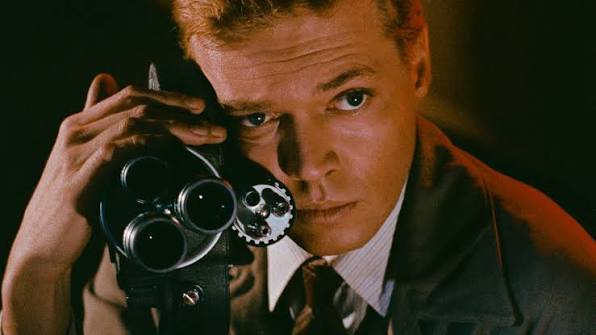
Peeping Tom (dir. Michael Powell, 1960)
Many films are dedicated to the subject of filmmaking itself, most of which celebrate the art form. However, some expose filmmaking as dangerous and perverse. Peeping Tom is one such film. Michael Powell made it on his return to England after directorial success with Emeric Pressburger in the States, unknowingly ending his career, as critics destroyed the film for its indecency. It follows Mark Lewis (Karlheinz Böhm), a focus puller and pornographic photographer, who films women as he murders them. The film is truly seedy, with its psychosexual violence using a Freudian camera as phallus. The script is by Leo Marks, who was first raised to run his family business of the bookshop at 84 Charing Cross Road, but ended up leading a 400 woman strong codebreaking department in the war. He wrote the script afterwards, viewing psychology as the ultimate codebreaking of the human psyche. Mark is the tragic result of childhood abuse by his father, the latter played by Powell himself in a complex moment of self deprecation, who wields a camera as his weapon. It is a masterpiece of horror, grappling with the sins of watching and being watched, of the desire to peep, at what filmmaking really is.
Cornelia Sheppard Dawson
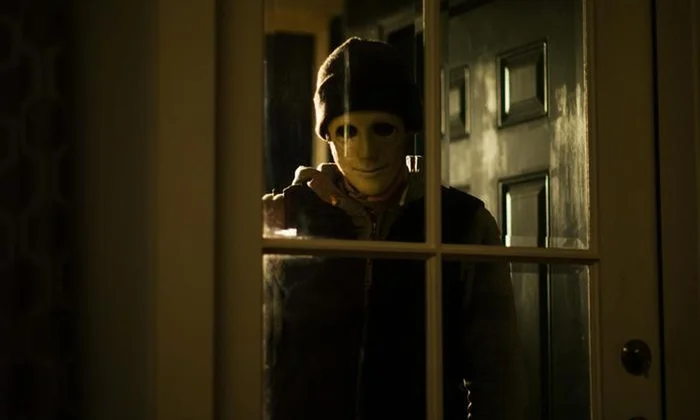
Hush (dir. Mike Flanagan, 2016)
As Halloween draws near, I think of the first time I was introduced to the horror genre, and I realise that it all started with Mike Flanagan. Some might say kudos, while others might ask which film/series as a testing factor. My answer might surprise you, for it wasn’t a vampire in a priest’s cassock, acid rain peeling off people’s flesh, the Bent Neck Lady (although that is a close second), or even the Oculus mirror that acted as my entry point. It was Hush – Flanagan’s sophomore feature, grounded in realism via a masked intruder with a crossbow, and the victim, a deaf and mute author played by Kate Siegel. At first glance, the idea of a fully abled man against a disabled woman prompts the question: what are the odds of the latter surviving? But what Flanagan does very differently is see our protagonist gather her courage, take some hits from our deranged killer, and emerge triumphant anyway. This just might be the maxim for Flanagan and how he approaches storytelling, from adaptations (The Life of Chuck or Doctor Sleep) and “reimaginings”, through to incorporating an author’s entire bibliography into a parable or allegory (Hill House to honour Shirley Jackson, Bly Manor for Henry James and House of Usher for Edgar Allen Poe). But I do believe his original stories are where he thrives the most – Midnight Mass and Oculus are my absolute favourite pieces of media. I say this however as I rewatch his recent gift Carrie, a reimagining of King’s Carrie White (my chosen Halloween read of this year) in a 2020s high school environment that includes social media as a new weapon for bullying, and has been renewed for a second season. Here’s to hoping he can get Johnny Smith from The Dead Zone to interact with his bloody heroine. In Flanagan We Trust.
Joanna Pinto
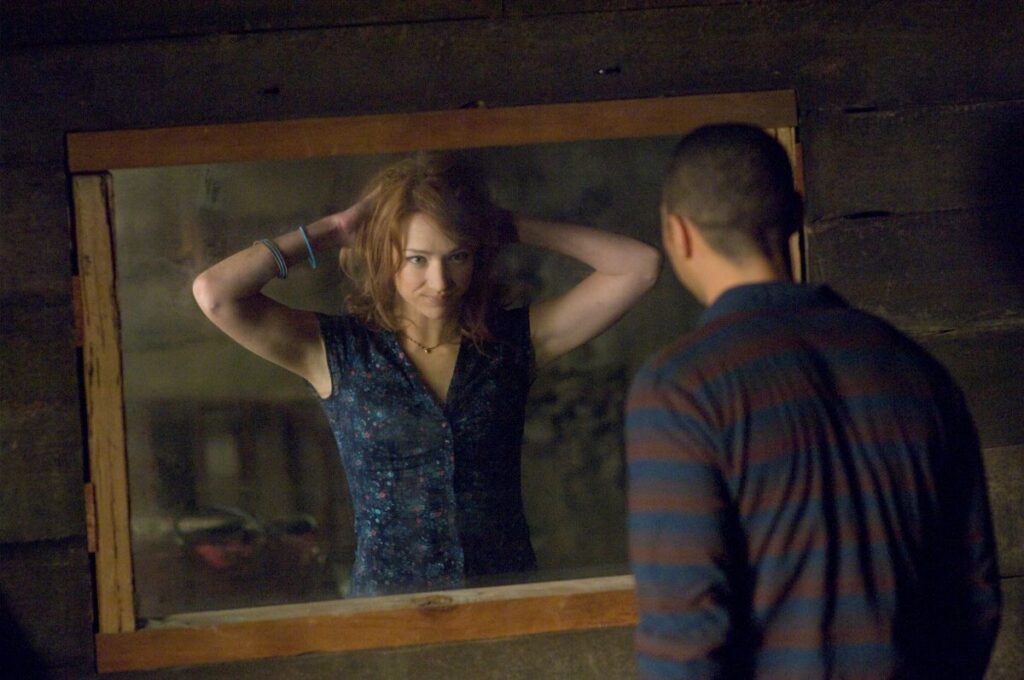
The Cabin in the Woods (dir. Joss Whedon and Drew Goddard, 2013)
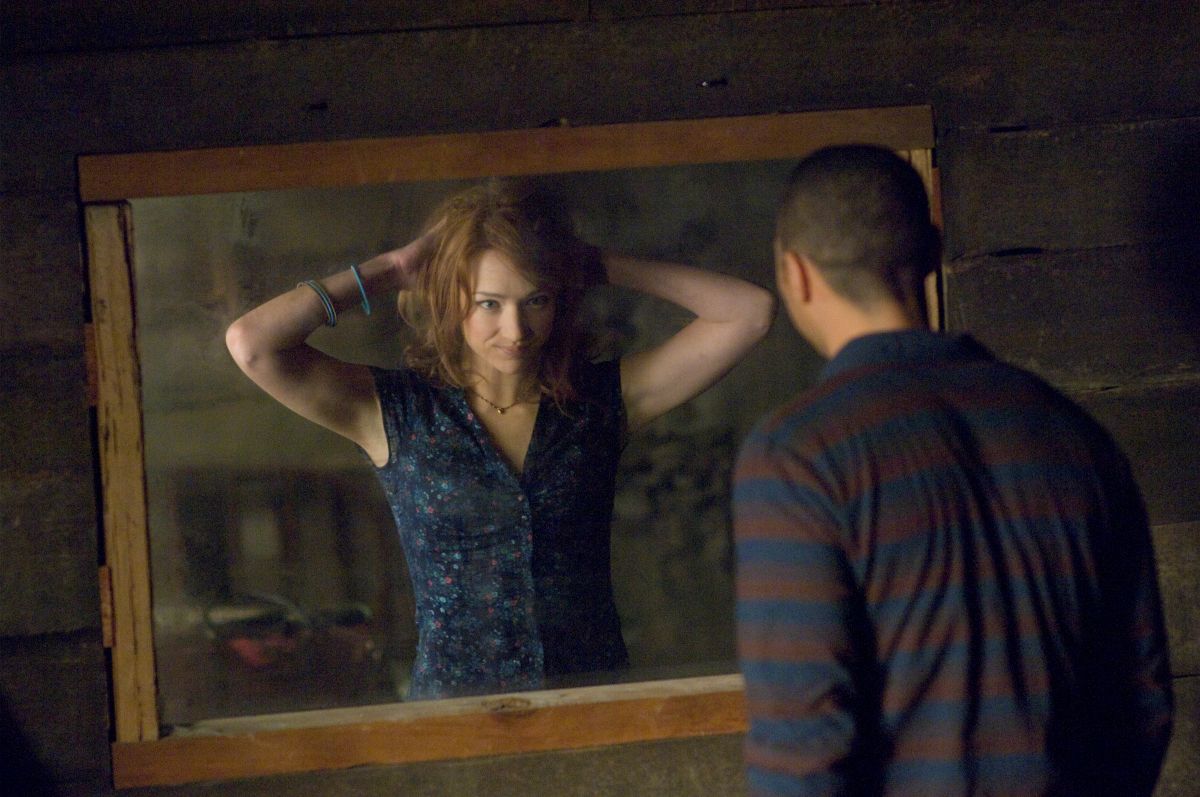
A book smart girl, a jock, his blonde girlfriend, a handsome scholar and an irreverent stoner head into the wilderness for a weekend getaway. This could be the start of a hundred horror films, which is exactly the point. Everything in The Cabin in the Woods, a creation of Buffy collaborators Joss Whedon and Drew Goddard, is carefully orchestrated to appeal to fans of the horror genre, and to a very particular in-film audience.
Athlete and group leader Curt (Chris Hemsworth) invites his college friends to spend the weekend in his cousin’s cabin, regardless of the foreboding gas station owner who tells them the cabin has been through several owners. There is also a spooky, gory painting on the wall of one room, a cellar door that opens seemingly by itself, a cornucopia of creepy knick-knacks, and a whispering voice prompting the group to take certain actions that only stoner Marty (Fran Kranz) seems to openly defy. A secondary plot is drip-fed to us from the film’s opening, which follows two company technicians (Richard Jenkins and Bradley Whitford) discussing a global operation most of their other branches have failed. It becomes increasingly apparent that their work is in service to some kind of ancient deity, to whom the cabin-bound students must be sacrificed in order to prevent an apocalypse. It’s a tongue-in-cheek homage to all the slashers that have come before, imagining them as part of the same programme and justifying the ill-considered choices so often made by characters in those films. Jenkins and Whitford have a blast with their roles, a perfect couple of corporate professionals who’ve seen it all and numbed themselves to the evil of what they’re doing. And when the blood does start to spill, it comes in buckets.
I think I was the perfect age for The Cabin in the Woods when it was finally released, almost three years after production wrapped, in the spring of 2012. As a newly minted teenager looking to expand my film palate, it gave me and my friends an opportunity to be both scared and tickled by the film’s extravagances. It works nicely as an entry-level horror, since it throws everything at the wall and largely sticks. In today’s landscape of increasingly meta, self-effacing genre pieces, some of its charm may be lost, but it takes the ball and runs even if the game plan is familiar.
Barnaby Whitehouse
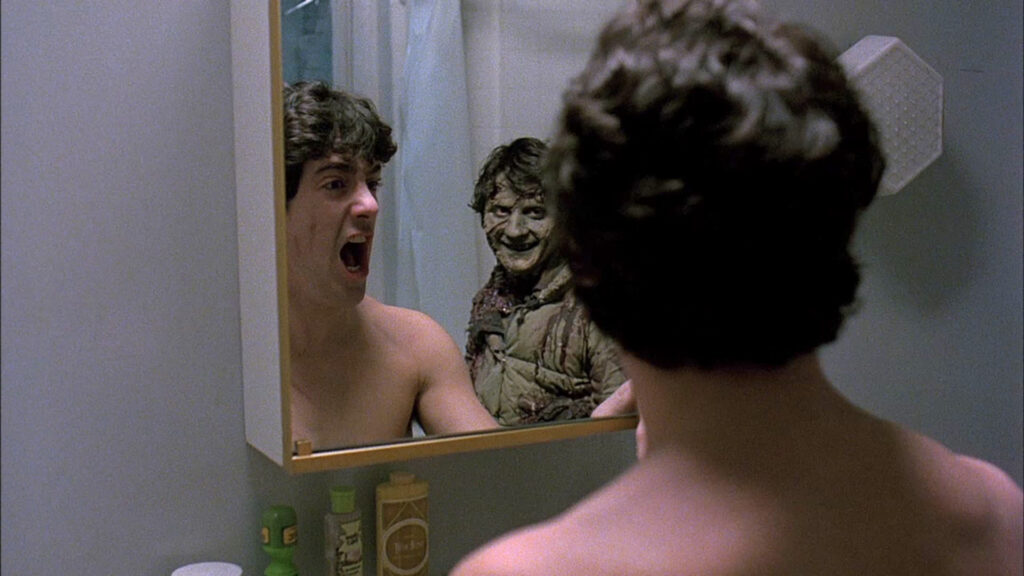
An American Werewolf in London (dir. John Landis, 1981)
I’m far from a hardcore horror fan, but as a huge sci-fi fan, I love the atmosphere of paranoia and claustrophobia evoked by encounters with bloodthirsty extraterrestrials in both Alien (1979, with the much-missed Tom Skerritt taking top billing over Sigourney Weaver) and The Thing (1982). However, my go-to Halloween viewing is a sublime mix of black comedy and genuine scares, set mainly in a now charmingly retro early ‘80s capital. John Landis’s An American Werewolf in London has long been one of my dad’s favourite movies, and when I was a kid, he couldn’t wait for me to watch it. I was equally delighted by the horrors that are inflicted on – and by – hapless Yank backpacker David Kessler (David Naughton) after being savaged by a lycanthropic monster on the Yorkshire Moors. The film is packed with classic scenes I can quote backwards: from the frosty reception David receives from the pub regulars at the Slaughtered Lamb; to the werewolf chasing a stiff-upper-lipped City banker (Michael Carter) through Tottenham Court Road tube station; to the chaos of the climactic bloodbath in Piccadilly Circus. Special mention goes to the spectacular practical effects, courtesy of makeup maestro Rick Baker, whose efforts led not only to the Academy finally relenting to demands to introduce a competitive Oscar for makeup (of which Baker was the first winner), but to him being enlisted to design the makeup for Michael Jackson’s iconic Thriller video the following year, and Landis being called in to direct it. 45 years on, American Werewolf will still make you laugh one minute and squirm the next. Watch it. Beware the moon, lads. And keep off the moors.
Arjan Arenas
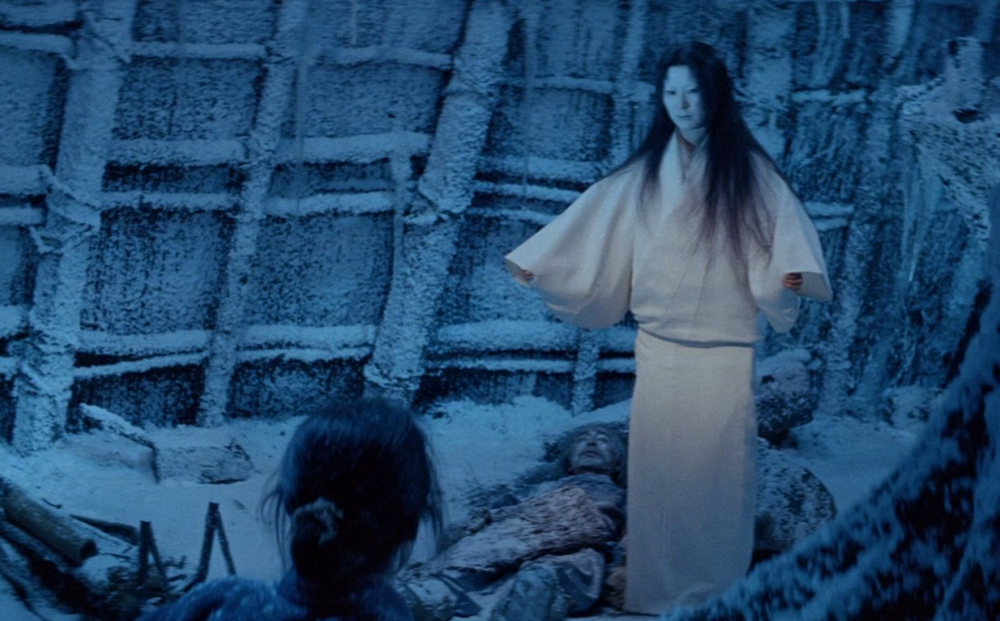
Kwaidan (dir. Masaki Kobayashi, 1964)
Kwaidan is probably the most pictorially stunning film I have ever seen. It is also perhaps the most unsettling. A tetraptych of four traditional Japanese folk tales rendered in terrifying Eastmancolor with vast, theatrical sets and an uncanny and versatile use of makeup to disquiet, Kobayashi’s masterpiece presents us with the greatest horrors of the human condition and refuses to provide us with any solace after the fact. With the oppressive forward momentum of something akin to destiny that continues unrelentingly at its slow yet steady pace, Kwaidan refuses to let you relax for even a moment of its three hour runtime (and if you’re a horror lover like me, you won’t want it to).
Luke Dyer
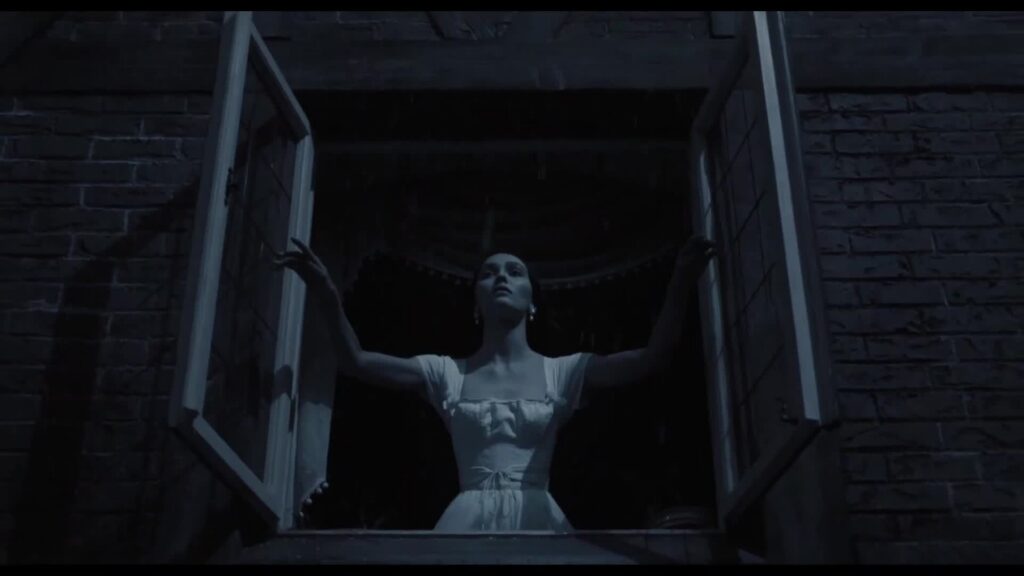
Nosferatu (dir. Robert Eggers, 2024)
What I love most about Robert Eggers’ Nosferatu is how it brings the adaptation back to its Gothic roots. Every frame feels like a painting with well thought-out and haunting compositions, rich and stunning production design, and excellent use of light and shadow. Eggers understands that horror doesn’t need to rely on jump scares. What makes his approach so special is how completely he immerses us in the historical setting, making the horror feel like an organic part of that world rather than something imposed on it. That’s why I’m beyond excited for his next film, Werwulf, which promises another immersive and thrilling experience.
Mariana Lema
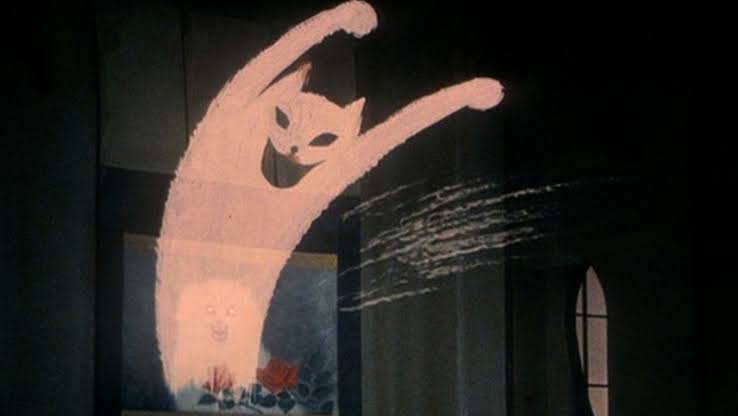
House (dir. Nobuhiko Obayashi, 1977)
You will seldom find a more creative, acid-drenched, fever-dream cavalcade carnival of whimsical delights and blood-soaked pick’n’mixed phantasmagorical 88 minutes. House, directed by Nobuhiko Obayashi, is a cult classic icon for its singular perception of reality, genre and visuals, and a hell of a good time at the movies, but here’s what uniquely resonated with me: its horror, gender and its gaze are as fundamental as blood. With an almost entirely female cast, and without anything resembling a male antagonist, it feels so refreshing to watch a horror film exempt from the male gaze. Even though it is directed by a man, it was written by a woman, Chiho Katsura, conceived by the director’s ten-year-old daughter, Chigumi Obayashi, and feels far from exploitational. I felt such a surreal comfort in being with these seven women as they visit their eerie aunt’s house, with a haunted cat that stares deep into their soul and no male bogeyman in the shadows gazing down upon them. Instead, it is the House itself that consumes them, in ways I wouldn’t dare spoil for the uninitiated. If the call is coming from inside the House, I strongly urge you to pick up.
Mishaal Memon
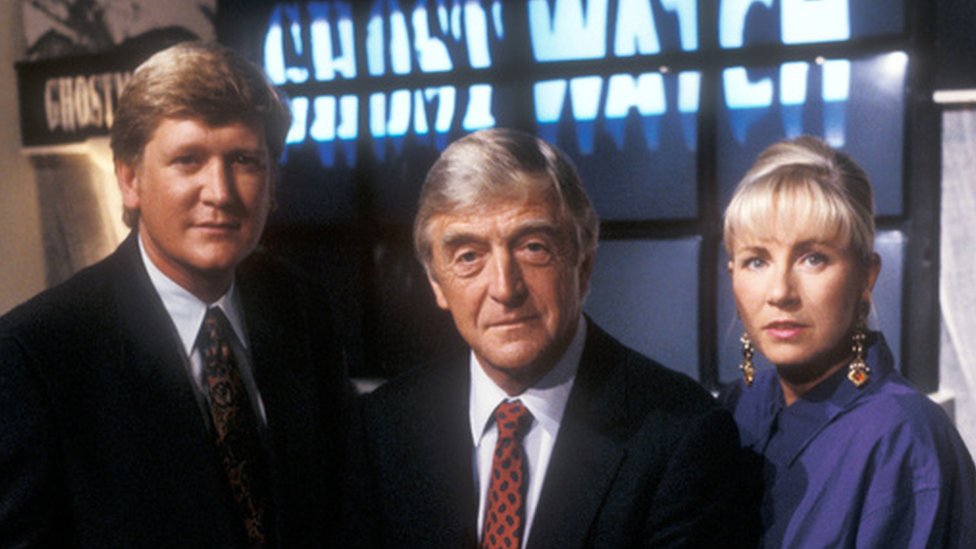
Ghostwatch (dir. Lesley Manning, 1992)
Though highly controversial upon its release on Halloween Night in 1992, Ghostwatch has endured as one of the most daring and frightening experiments ever attempted by a major television broadcaster. Staged to look like a real British news program exploring the existence of the supernatural, the gamely committed performances of real news presenters Michael Parkinson and Sarah Greene make this BBC horror film frighteningly realistic. It gets under my skin precisely because of its unnerving mundanity, drip-feeding scares under a stifling tension across its first two acts before unleashing a train of madness that is impossible to stop. Ghostwatch sits right alongside Orson Welles’ radio broadcast of War Of The Worlds in the annuals of staged reality horror, influencing films as recent as 2024’s Late Night With The Devil. Found footage at its most unsettling, this terrified people then and terrifies me now, remaining one of the most impressive risks ever put to screen.
David T. Francis
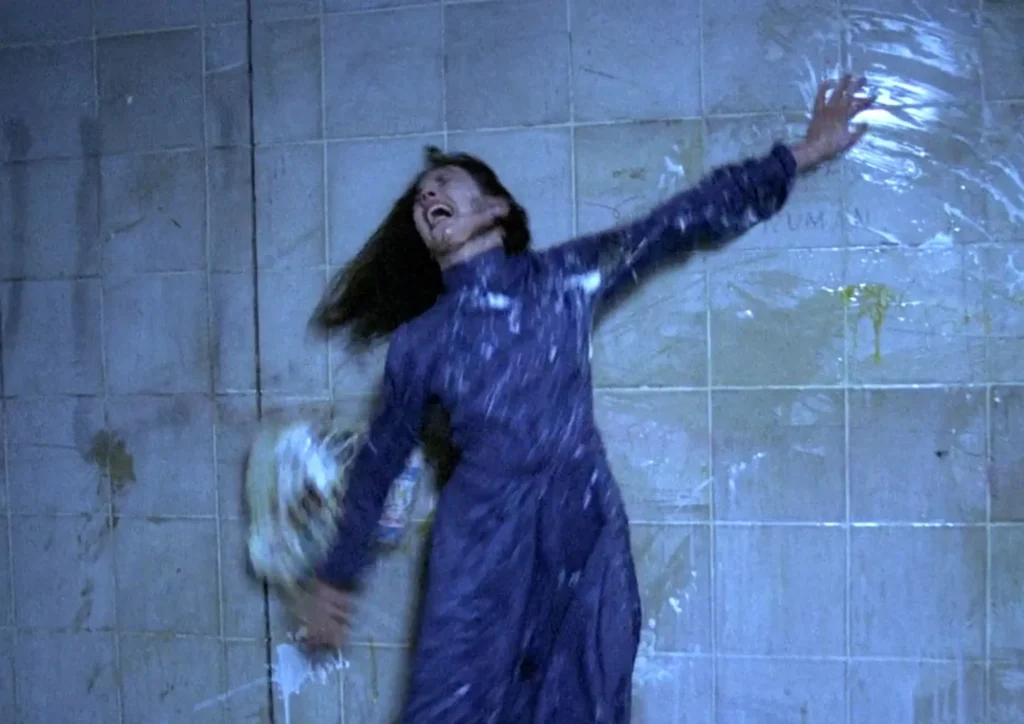
Possession (dir. Andrzej Żuławski, 1981)
In 1981, Andrzej Żuławski’s Possession left most critics cold. Today, it has Letterboxd users writing four-paragraph reviews at 2 a.m. The film follows Mark (Sam Neill) as he returns to West Berlin and finds his wife, Anna (Isabelle Adjani), determined to leave him, offering no reason and no apology. The first stretch plays like Marriage Story with the heating turned off, all long, sour arguments, before drifting into something more akin to the uneasy dream worlds of David Lynch. Written in the aftermath of Żuławski’s own divorce, it carries the weight of something lived rather than imagined. The Wall is never far from frame, which suits a film so preoccupied with division and doubles. Even the title isn’t quite what it seems: Żuławski is less interested in demons than in the very ordinary urge to own another person. Shot at off-kilter angles, with a camera that rarely stops moving, even the calmest scenes feel slightly wrong. Neill unravels by degrees, but this is Adjani’s show, for she won Best Actress at Cannes and remains the benchmark for female rage on screen. The subway scene has long since outgrown the film itself, turning up everywhere from memes to film school essays, yet nothing quite prepares you for it in context. If nothing else, it’s a good reminder this Halloween that whatever you went through with your ex, Mark and Anna went through worse, and in much better coats.
Muskaan Jindal
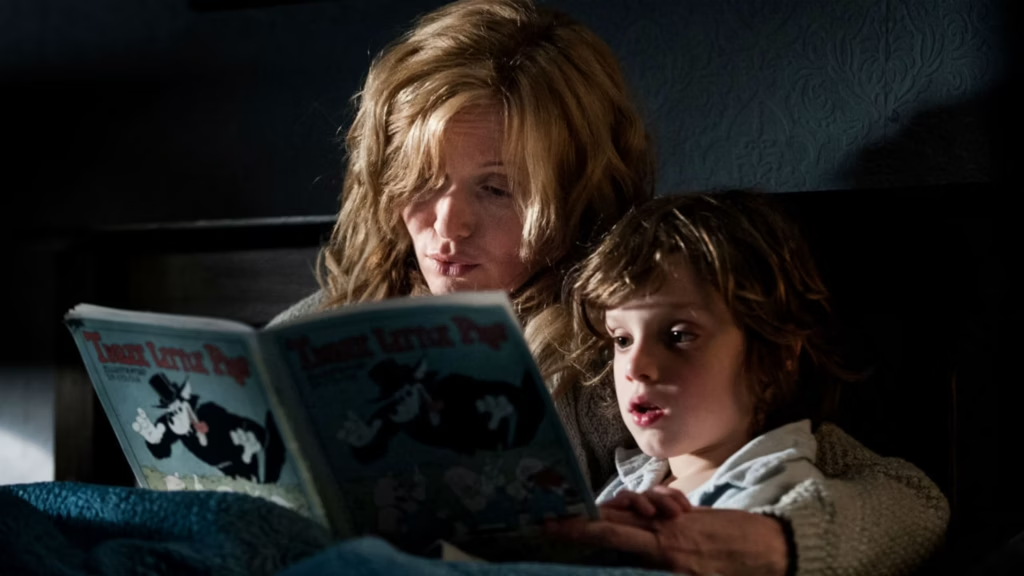
The Babadook (dir. Jennifer Kent, 2014)
The Babadook is what good horror is all about. On the surface, it is the story of a grieving and isolated widow, Amelia, trying to hold her life together as a malevolent spirit enters her home, threatening the life of her six year old son, Sam. The film can be totally enjoyed on this level alone, but beneath all that is the real sauce: it also offers an exploration of the terrible and dissociative unravelling that can occur when a mother realises that she is wishing harm upon her own child. The monster, Mr. Babadook itself, can be viewed as a simple nefarious spirit, but on peeling back the layers we see Amelia’s conflict with it as her battle with the darkness brewing in her own heart. It’s a tragic, painful, and deeply moving confrontation with the troubling feelings any of us may be tortured by under such circumstances. The film struggles a little to tie its themes together in the final act, but it is overall a masterpiece of horror storytelling and a powerful example of how the genre can wrestle with the hard and shadowy corners of life that we often don’t have any other language for.
Faisal Shaker
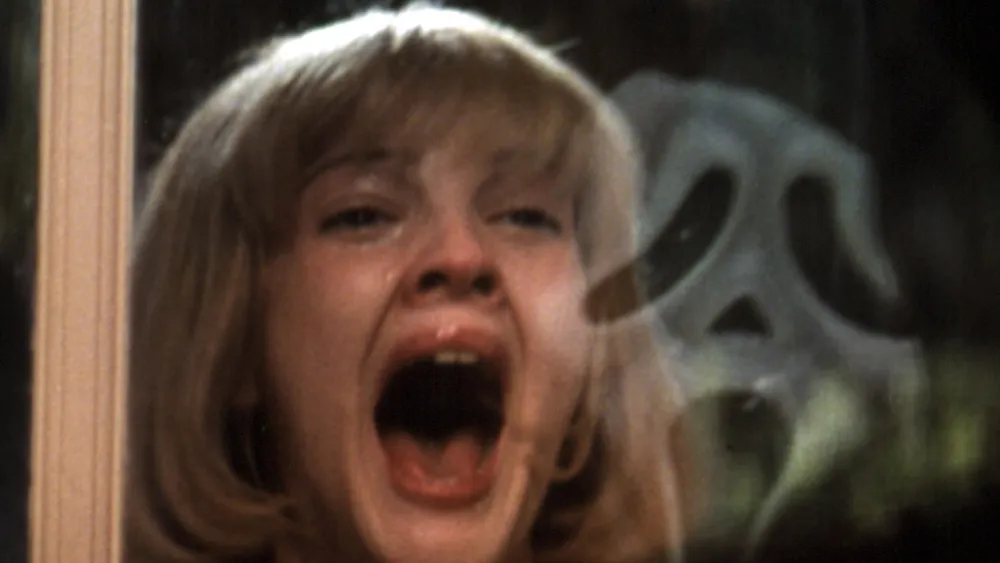
Scream (dir. Wes Craven, 1996)
What’s your favourite scary movie? It’s Scream, Mr. Ghostface. Time and again, Wes Craven’s meta slasher is the comfort film – strangely – that I come back to when I’m in need of a jump scare or a laugh. It’s quintessentially of its time, and yet endlessly updatable, as have testified its string of sequels, some competing with its master craft, others falling short, none ever living up to the original. Neve Campbell is the ultimate final girl as Sidney Prescott, the teenager subjected to the incessant taunting of a serial killer in a cheap plastic mask who likes a chat on the phone. The original cast are now the blueprint for any slasher that wants to give Craven’s masterpiece a run for its money: no-nonsense best friend (Rose McGowan), sexy but suspicious boyfriend (Skeet Ulrich), goofy jokester (Matthew Lillard), horror connoisseur (Jamie Kennedy, who monologues the do’s and don’ts of a scary movie whilst watching Halloween, all while his friends commit the very don’ts he warns us of). The “adults” who end up in the midst of it all are weatherwoman turned journalist Gale Weathers (Courteney Cox) and budding police officer Dewey Riley (David Arquette), who lend the film a “detective” angle while the kids are locked up at curfew (or not). There isn’t a single moment lost in Scream, and Kevin Williamson’s script brilliantly balances the horror of small-town America with the humour and offbeat energy that one can expect from a serial killer who doesn’t quite know what to do with his limbs, all played out against the resonant beat of Nick Cave’s Red Right Hand. Hand over the popcorn!
Juliette Howard