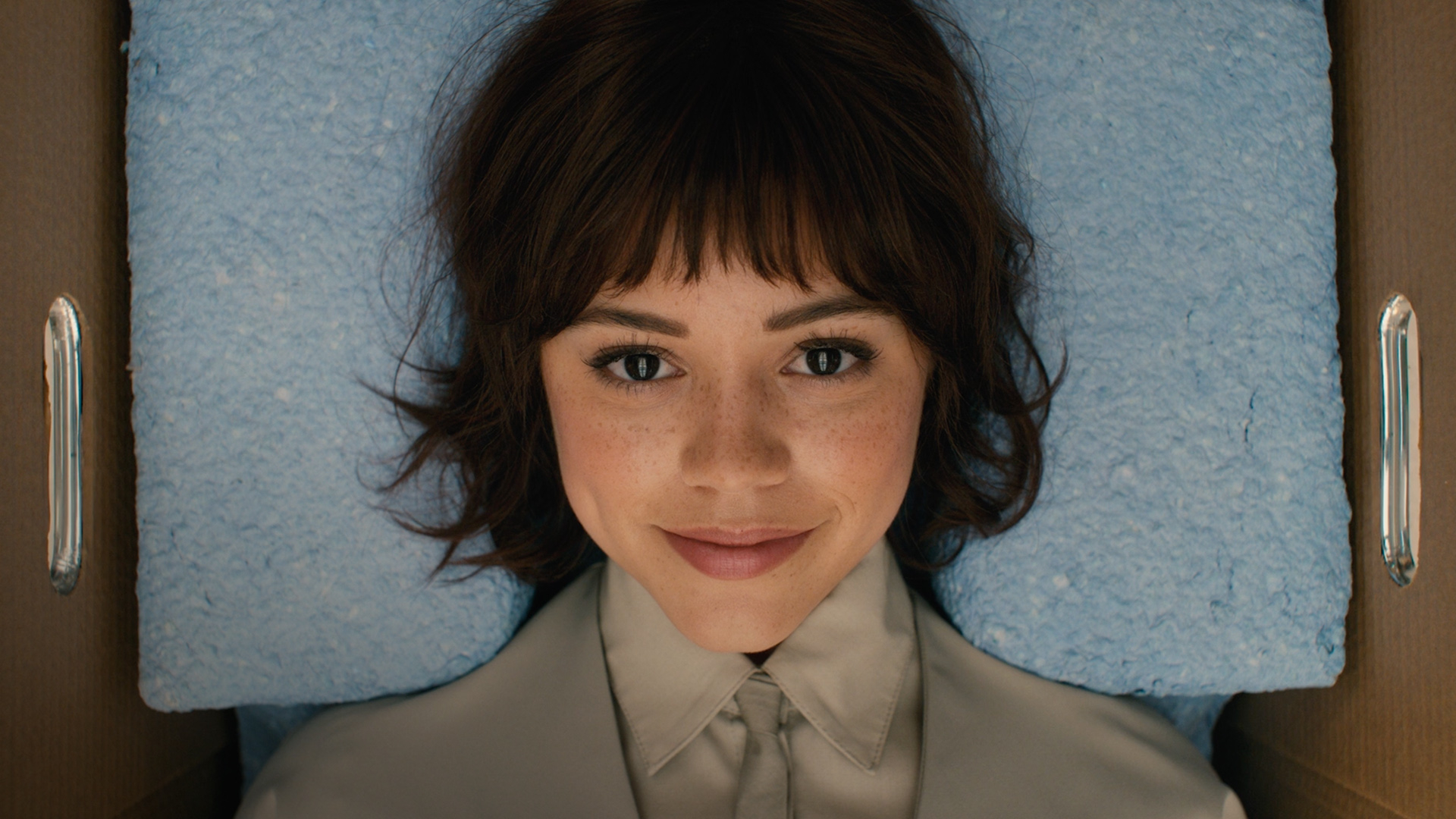
Jenna Ortega is a standout in Taika Waititi’s sweet and silly adaptation of Kazuo Ishiguro’s novel Klara and the Sun, a somewhat optimistic depiction of a near future in which lonely people can buy AFs – or, Artificial Friends – eerily humanoid robots designed to keep them company. In 2026, this feels almost outdated – who needs a full living thing when ChatGPT is at your fingertips ready to listen? – and a certain suspension of disbelief is necessary to indulge in it, but Ortega’s physical acting is truly something special, and so despite its many faults and its apparent disregard for the ethics of such a concept, Klara and the Sun becomes inherently watchable, if only because Ortega’s Klara is so eager to please.
As an older B-1 android model, Klara and her friends at ‘The Friend Store’ don’t have much of a chance of ever getting chosen, especially since the B-3s are right across the street from them. So when Josie (Mia Tharia) comes along and picks her despite her mother Chrissie’s (Amy Adams) reticence, Klara can’t quite believe her luck. Josie lives a lonely life in a lavish home in the countryside, with only her day-to-day activities and local boy Rick (Aran Murphy) for company, and for a while, she and Klara are inseparable. But when she loses consciousness one day, she reveals to Klara that she is “lifted”, a type of intelligence-enhancing gene therapy, and that something went wrong in the process, rendering her chronically ill. Everly optimistic Klara pleads with the sun, who she believes to be a form of deity able to grant wishes, to cure her friend, as a looming threat in the wheat fields threatens her connection to it and Josie’s condition worsens.
In many ways, Klara and the Sun feels like a cardboard cutout of a story – its treatment of dystopic/modern themes, such as artificial friends and intelligence enhancement in the wake of AI, is so simplistic that it is almost laughable. No one questions the inherently depressing concept of buying yourself a friend, nor does anyone ever reflect on the ethics of it, or the potential sentience of the AFs. Aside from rumours that a model ‘went crazy and killed a bunch of people’, a titbit delivered with a note of comedy, there is no mention or fear of the robots ‘taking over’, a theme that has become so prevalent in modern times. Yet isn’t it kind of nice for once to have a story where androids aren’t inherently evil or worrisome (even though in reality, yes, they are)?
Moreover, there is a real sensitivity to each of the characters here, from Klara’s devotion through to Chrissie’s struggles with grief and motherhood – with very little screentime, each actor – even Murphy, who seemed more preoccupied with his robotic birds than being a part of the story – brought a vast, personal ecosystem of feeling, of good intentions that felt like a warm hug. There is very little psychology to Klara and the Sun, despite its topical themes, and yet it is so strangely joyous and whimsical and incomprehensible at times that I couldn’t help but feel enchanted by it all. Tharia’s excellent eye rolls, Adams’ hardened stare, Ortega’s fascinating control of her movements and widened eyes, which no doubt she mastered on the set of Wednesday – for someone who has never quite adhered to Waititi’s style despite its evident merits, Klara and the Sun was something, against all critical odds, that I could happily get onboard with.
Klara and the Sun screened at the London Film Festival and is now in UK cinemas.