
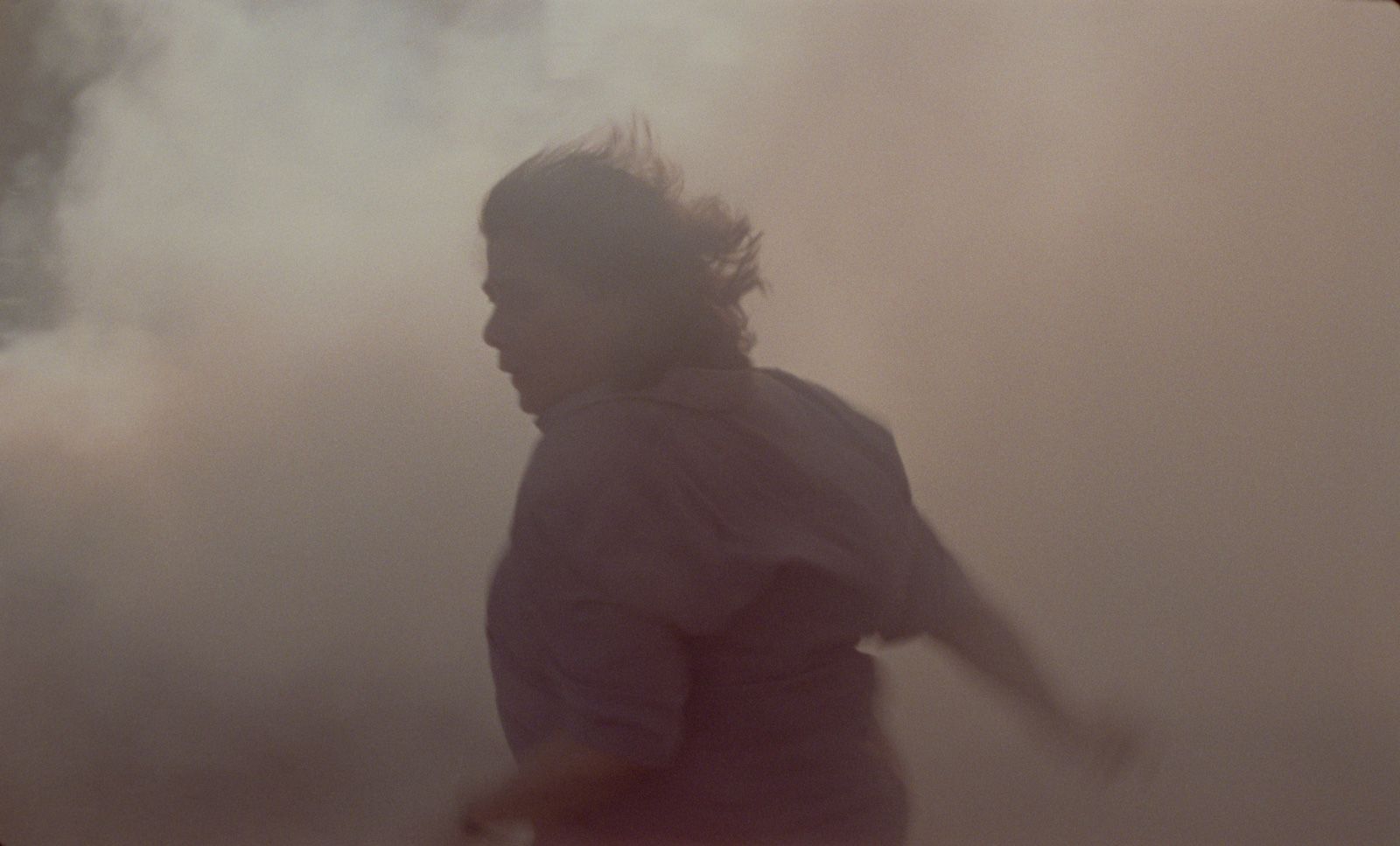
Following his Academy Award nominated live action short DeKalb Elementary, Reed Van Dyk directs his first feature Atonement, a gut-wrenching story of trauma and forgiveness, not to be confused with the 2008 period drama starring Keira Knightley. Based on the 2012 New Yorker article of the same name by Dexter Filkins, named “the premier combat journalist of his generation”, it’s a real feat of emotional heftiness, with excellent performances from its cast, but the journalistic framework, spearheaded by Kenneth Brannagh (as a fictional sort of Filkins), inherently lacks substance and inevitably weighs it down into the most traditional of genre films.
After the house next door is bombed during the Iraq War, Mariam Khachaturian (Hiam Abbass) and her family decide to travel to their relative’s home across town. Unknowingly passing through a crossroads where a shooting is taking place, Mariam’s husband and two sons are mistakenly shot. Ten years later, Lou D’Alessandro (Boyd Holbrook), one of the soldiers who was a part of the firing unit that day, is haunted by the memory, prone to aggressive outbursts and uncontrollable shaking. Desperate to make amends, he employs the help of Michael Reid (Brannagh), who interviewed the family back in Iraq and has since stayed in touch, to organise a meeting with the family members whose lives he destroyed.
Atonement is to begin with fairly straightforward in its treatment of war and post-traumatic stress disorder, Holbrook providing here a brilliant performance in the modern day section of the film – there is a scene in which an old unit member shivers down the phone to him, desperate to talk to someone who will understand. Lou paces up and down the room, voice quivering, before hanging up abruptly and vomiting when his friend whispers that he loves him. Paired with this vulnerability however is Lou’s inherent unlikability, erasing any American-centric accusations that might come this film’s way – it is so obviously difficult to feel for him when Mariam and daughter Nora (Gheed) are so honourable and kind. But here, once again, plays out the complexity and contrasting nature of his character – his oblivion, so hateable at first, gradually becomes instead deeply moving glimmers of his inability to process his past. When he first contacts Michael, he asks to co-write the article for instance, substantiating the journalist’s suspicions that he is only seeking retribution “for the story”. Yet, it is clear that Lou isn’t looking for any type of publicity – he just wants an out to his endless suffering. The inevitable final “sit down” in this sense feels a little too clean a conclusion for such a messy situation.
What might have set Atonement aside is its journalistic framework, its true story foundations, which unfortunately are largely cast aside post title card. Brannagh provides an adept enough performance, but he feels strangely slotted in, a simple messenger rather than a substantial asset to the story. He sits down in the aftermath of the deaths with the family, scribbling notes, interviews Lou about his side of the story, also scribbling notes. There is even a scene in which he meets with an old colleague-cum-lover, and a bizarre exchange takes place in his hotel room as he prepares to “call the family”. There is never a hint of an article, or of character development for Michael, who more and more begins to resemble the furniture in the Khachaturian family home. The result is that a major piece feels missing here, a reflection on the written word, on testimony and memory that might have added a dimension to Atonement’s commentary on war and destruction.