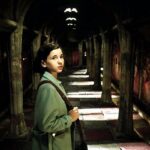
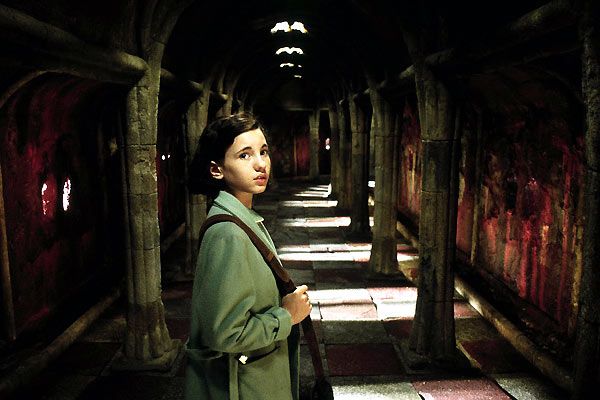
Guillermo del Toro’s dark fairytale sensibilities shine through in Pan’s Labyrinth, the story of an imaginative young girl who accepts her apparent destiny as the lost princess of the underworld. In the summer of 1944, 10-year-old Ofelia (Ivana Baquero) arrives at the country estate of her new stepfather Captain Vidal (Sergi López), an emotionally stunted and highly traditional armed police officer who is adamant that his child with Ofelia’s mother (Ariadna Gil) will be a boy. On her first night in her new home, Ofelia is led by a fairy into a neglected labyrinth to meet an ancient, physically imposing Faun (Doug Jones), who recognises Ofelia as the long-lost Princess Moanna and gives her three tasks in order to reclaim her old life. Deeply unhappy with her life in the surface world, Ofelia readily accepts.
Pan’s Labyrinth in many ways is a film about turning points. As Ofelia’s childhood comes to an end, with allusions to the physical trials of womanhood, so do the remnants of the Spanish Republic give way to Franco’s nationalists and the magic of the old world fade to be replaced with cold, hard reality. It also represents a transition from largely practical filmmaking to the domination of digital effects, but utilises both stunningly. Doug Jones’ physical performances as the Faun and the terrifying Pale Man are the most vital parts of the fantasy world presented to us, not to mention a giant toad rendered through a combination of puppetry, a performer in a suit and CGI. It’s a mesmerising balance of disciplines which ought to be treasured, even if some of the VFX don’t hold up all that well now. The film is especially valuable in the landscape of its own time, coming out shortly after Peter Jackson’s The Lord of the Rings trilogy raised the bar for fantasy filmmaking and inspired many epics to follow. Pan’s Labyrinth does not attempt the same scale but rivals the trilogy in emotional depth, focusing on the growing pains of a young girl wanting to escape through fantasy, rather than a mission to destroy evil and restore goodness in the world. Evil has very much prevailed in Ofelia’s reality.
As outwardly traditional as the fairytale elements are, del Toro twists them into versions that may make the film a hard watch for uninitiated viewers. The reality of the setting likewise makes this not for the faint-hearted, as Captain Vidal hunts resistance fighters in the woods near his home, even brutally murdering a farmer whom he suspects of working with them. Vidal is cold and psychopathic, having no patience for Ofelia’s fantasies and dealing swiftly with traitors in the midst of his staff. The film’s ending is at once triumphant and tragic and leaves it unclear whether the story’s magical aspects are to be believed. In any case it deals tenderly with a loss of innocence, giving us a protagonist who is faithful and courageous right to the end.
Very few productions since Pan’s Labyrinth have tackled similar subject matter (Coraline perhaps is one, and a well-liked one at that). The appetite for fantasy aimed at adolescents appears slim, the options limited to crowd-pleasing franchise instalments (Jumanji, How to Train Your Dragon) or adult-focused series (Game of Thrones, The Witcher). Teens are a critical audience to try and pull into cinemas if we want them off their phones, and the fantasy genre is rich with explorations of growing up that could inspire younger generations, especially as reality is increasingly bleak.