After international successes such as La Petite Dernière (Hafsia Herzi’s The Little Sister) or Diamant Brut (Agathe Riedinger’s Wild Diamond), French cinema is gaining another promising and complex coming-of-age film focused on the generational struggles young people face day-to-day. Marine Atlan’s exciting feature debut, La Gradiva, continues the trend of films centred on youth, although the core of the story is universally relatable. Previously known as the cinematographer for films such as Alexis Langlois’s stunning Queens of Drama or Iris Kaltenback’s poignant drama The Rapture, Atlan makes the transition to directing smoothly and confidently. Her deep dive into the tumultuous minds of teenagers is bold, but still retains a soft spot for the roughness and confusion of adolescence.
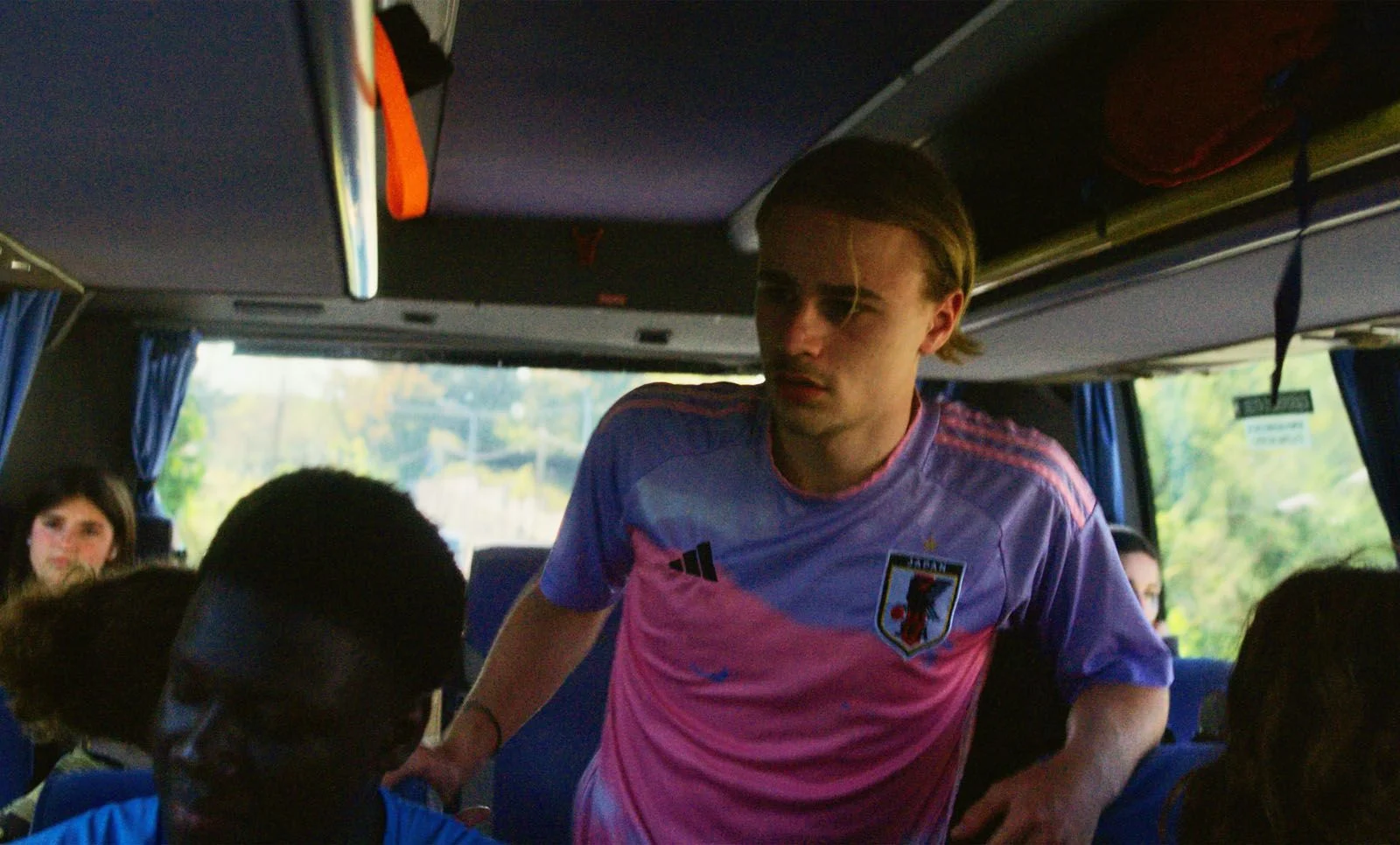
La Gradiva follows multiple students on a school trip to Naples and Pompeii, particularly Toni (Colas Quignard), the first to appear onscreen – and the most memorable. Toni likes playing loud music on the train, discussing his sexual fantasies with his friends, and telling half-true stories about his family heritage. The last one takes a particular toll on him, as one of the main reasons he has come on this trip is to uncover his past, which in turn ends up being far more complicated than he had imagined. On the other end of the spectrum, we follow Suzanne (Suzanne Gerin), a girl who enjoys the company of her Agatha Christie novel more than that of her classmates. Numerous other students orbit around this central duo, all of them played by newcomers, and together they form the essence of the film, the sense of camaraderie, the collegiality and community that can emerge on such trips.
Atlan and co-writer Anne Brouillet’s ability to portray particular experiences and circumstances in ways that feel relatable for all ages and nationalities is one of the greatest strengths of the film and builds some of the more memorable moments. The stereotypes are present – Toni as the class clown or Suzanne as the shy, introverted girl – and this writing duo approach their characters with curiosity and candour rather than harsh judgement. One might argue that the film centers on Toni’s personal journey into his family’s past and his attempts to understand the person he is becoming, but the most striking scenes are those in which the group is in focus, rather than any particular individual. The argument the students have in front of the a museum about female representation in art, or the heated political discussion they have around a long table, are some of the longest takes of the film and show us overlapping conversations, awkward silences, or characters who might otherwise remain peripheral, such as the teachers, especially the intriguingly sharp-witted Madame Mercier (Antonia Buresi).
An Italian escapade with friends sounds idyllic, and it is certainly the kind of experience many high school students would dream of: delicious gelato, atmospheric restaurants with checked tablecloths, sky-blue waters and dimly lit cobblestone streets at night. But being a teenager has never been that easy, despite the many films that portray it as a carefree period, full of partying and romantic discoveries. Young people today are increasingly confronted with anxieties about the cost of living, the housing crisis and the rise of the far right, concerns which Atlan seems aware of, and blends into a portrait of contemporary generational struggles. La Gradiva finds the delicate line between the childish behaviours of adolescence and the growing responsibilities and anxieties that weigh on teenagers approaching the end of high school. This refined attention to everything in-between makes the film resonate with young audiences everywhere, while also offering something meaningful for those looking back on their own formative years.
La Gradiva screened at the London Film Festival and Bucharest International Film Festival, and will next screen at the French Film Festival in South Kensington, 18-23 November. It will be released in UK cinemas on 1 January 2027.