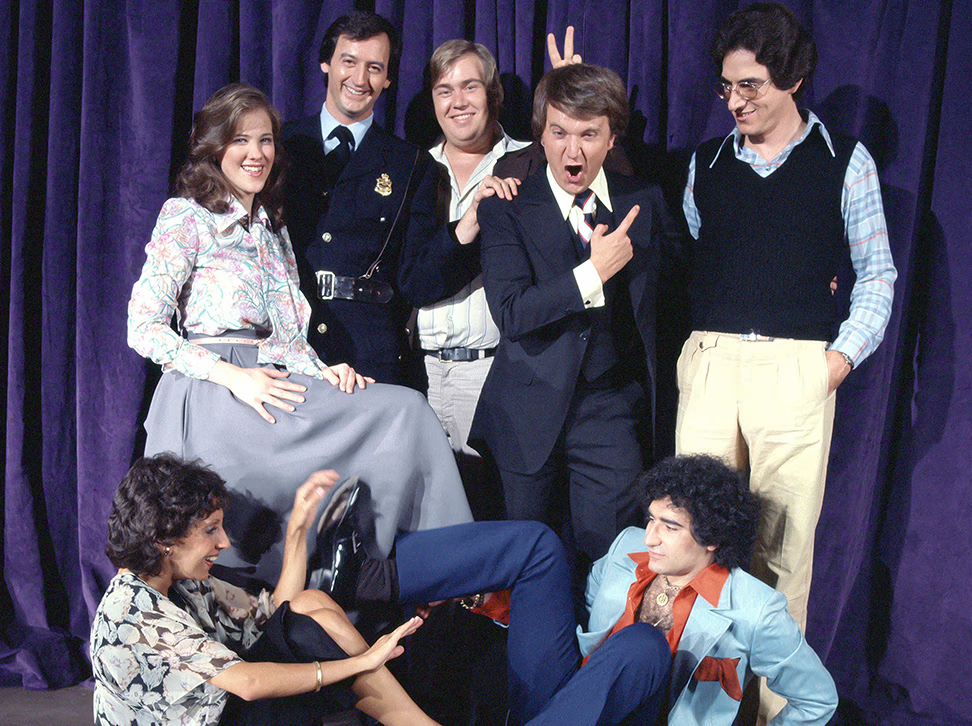
For a show that is posited by its documentary’s own title as lost to history, it is remarkable just how successful a parodic sketch show Second City Television Network was. Created as a satirical response to traditional broadcast television, between 1976 and 1984 the show launched the careers of John Candy, Eugene Levy, Martin Short, Rick Moranis and Catherine O’Hara to name but a few. The show’s unlikely success story from humble beginnings on local Canadian Broadcasting to Emmy success and global recognition is retold in a charming documentary from Jason Hehir (The Last Dance), charting the rise and fall of the budding sketch show which at its peak gave even Saturday Night Live a run for its money. Just as the original sketch show makes its way to Netflix’s archives, there has never been a better time for a joyful celebration of a superbly subversive show, although it’s a shame the documentary around it didn’t take anywhere near the level of risk the show it covers did.
Described in advertising as “the late night Saturday after Saturday Night Live”, SCTV can be firmly positioned alongside its American competitor. In fact, SCTV’s very existence can be attributed to preventing Lorne Michaels and the SNL team from luring Canadian talent across the border by providing a legitimate alternative. That alternative, it turned out, was a lower budget but creatively rich sharebox of ideas and impressions that became a cult hit and comedically inspired a generation. Characters like stingy network host Guy Caballero, unhinged station manager Edith Prickley or deluded diva Johnny LaRue entertained viewers week after week, while the uncanny impersonations of Short, O’Hara and especially Moranis remain a sight to behold. Many of the sketches still hold up today, particularly given they were somewhat more apolitical than SNL’s ‘topical discourse of the day’ style sketches. As many in the documentary point out, in SCTV the more niche the reference the more absurd and consequently the funnier it became. As the show grew in popularity, network turbulence and increased demand for ratings threatened to quell the creative spirit, making the gap between artists and producers’ intentions increasingly tough to manage.
A documentary on SCTV was initially envisioned by Martin Scorsese back in 2018, but was abandoned in favour of other projects. A live cast reunion in Toronto even took place, but footage remains vaulted. Hehir, with support from executive producer Jimmy Kimmel, started a new project from scratch, filming original footage with the same surviving cast members. Nearly all the principal players reunite in a plush home to reminisce on bygone days, save for Rick Moranis who appears only by talking head. The show contains others, including producer Andrew Alexander, who discusses the logistical challenges of keeping a sketch show on the air ravaged by small budgets and the eagerness of bigger fish to poach their talent. Alongside the cast and crew are a series of A-list fans of the show, including Tom Hanks, Conan O’Brien, Bob Odenkirk and a very excitable Bill Hader, whose enthusiasm for the show is obvious and infectious. The documentary also celebrates those no longer with us, paying tribute to John Candy, Harold Ramis and Joe Flaherty, the latter of whom was present for the original Scorsese interview but sadly passed before this documentary could be made. There is a further sense of melancholy in seeing Catherine O’Hara so lively and delightful with her fellow cast members less than 6 months before her untimely death at the age of 71, even more tragic considering she is the youngest cast member in the room. Even so, her infectious energy and incredible rapport with the cast, Levy and Andrea Martin in particular, is purely delightful to watch.
Structurally the documentary reveals little new, mostly presenting chopped up archival footage from the show while talking heads either overexplain the jokes or tell us what fun they had making or watching it. The most interesting analysis revolves around the cultural phenomenon of Bob and Doug Mckenzie, a pair of comedically exaggerated Canadian slackers portrayed by Moranis and Dave Thomas. What started as a rib on the network spawned into SCTV’s biggest cult hit, spawning an album and starring roles in the 1983 film Strange Brew. The fallout from this, both in the interpersonal jealousy between cast members and the inherent frustration that perhaps their stupidest sketch was the one to break into the zeitgeist is interesting to watch, but accounts for only a small portion of an otherwise sunny piece. Hardcore fans of the show will note some glaring omissions, including the entirety of its final season on Cinemax and any real mention of some important cast members like Tony Rosato and Robin Duke. However, this documentary feels too designed to appeal to much more than a casual market, a brief play-by-play on the show’s history and legacy. That may leave hardcore fans out in the cold desperate for more, but newbies to the property will probably leave with just enough information to feel satisfied, and hopefully a desire to seek out the original sketches which are thankfully just a click away.
While the standard of the subject outweighs the quality of filmmaking, those looking for the fastest primer on the show and its history could do worse than this good hearted documentary. While the celebrity talking heads can be unnecessary and the show is clipped to the point the sketches don’t always sing to the same degree as when uncut, this gives a good base level understanding of what made the show the standout it was. If nothing else, it’s worth it if only to see one last vivacious turn from the magnetic Catherine O’Hara. May her legacy, and the legacy of this terrific show, live on!
SCTV: The Greatest Show You’ve Never Heard Of is now on Netflix.