
An eight-year-old girl, running in the park with her father, takes the lead and sees him fading into the distance as she makes a turn. No, contrary to our hyperactive parental gut reaction, she does not get snatched. Nor does she sustain a terrible physical injury. She witnesses a man raping a woman, from beginning to end, and we do too.
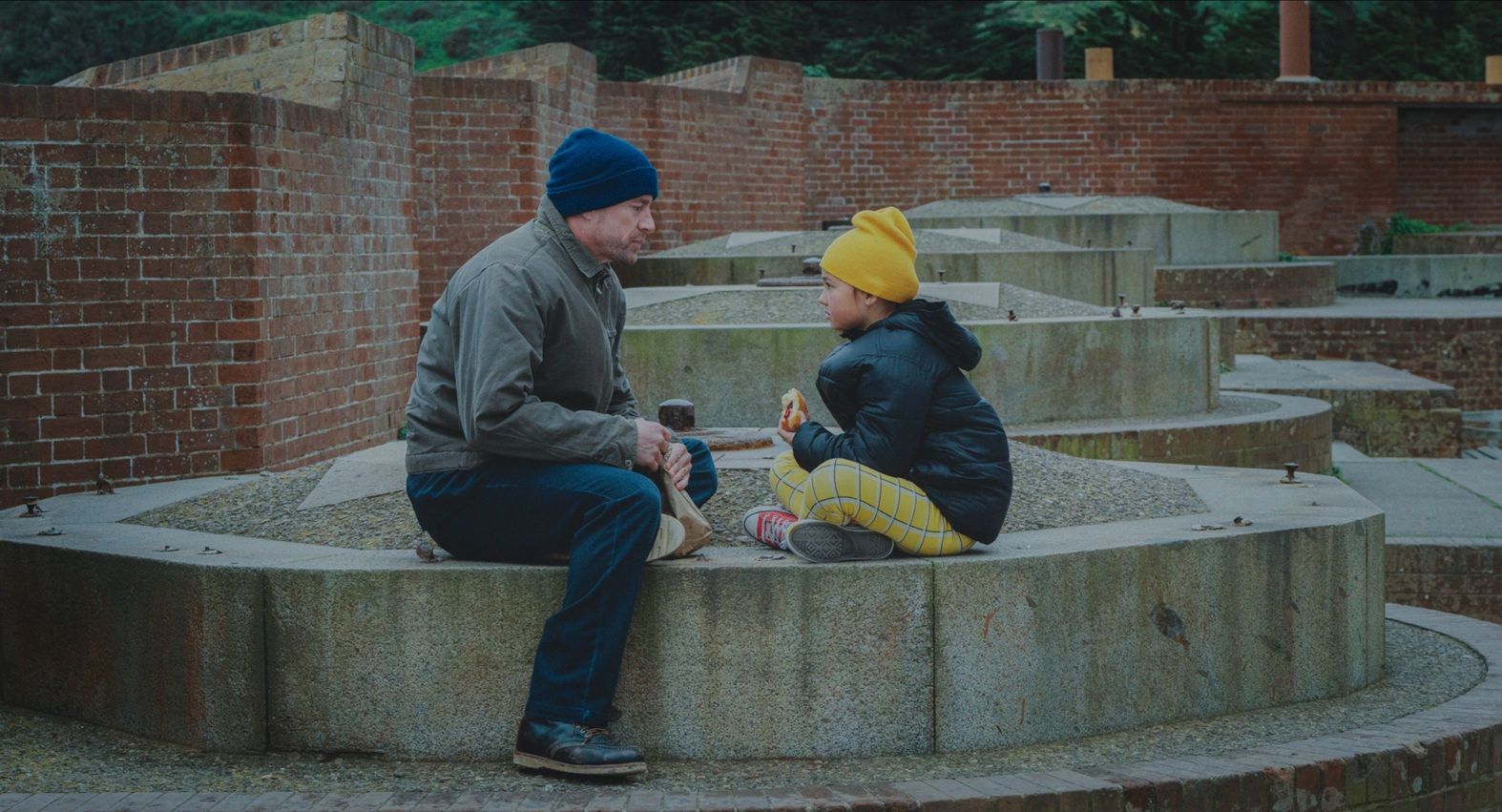
Josephine (Mason Reeves) has a close, football-based bond with her dad Damien (Channing Tatum), who eventually comes running in and helps the police apprehend the rapist. Damien and Josephine then resume their day of kicking a football around and doing leg-strengthening exercises; Damien avoids the subject when Josephine asks what the man was doing at the park. But as anyone with even an ounce of sense might foretell, things are far from resolved.
Writer and director Beth de Araújo made Josephine based on an experience she had during childhood, and she pushes this narrative into gritty and challenging directions. Chief among some likely controversial decisions is the unflinching and straightforwardly filmed rape scene, a set of images that are harrowing for us to watch, utterly incomprehensible for a child. Josephine returns to her everyday life the best she can, encouraged by her father and befuddled mother Claire (Gemma Chan), but she struggles to process what she’s witnessed. She becomes untrusting of men, feeling unsettled by each man that walks by (an early initiation into a feeling many adult women share). She also reacts with anger and violence when provoked by her classmates and slowly develops an animosity towards her father.
And while her parents are determined to drag her back onto a path she’s strayed from, a thousand forces are tugging her back. The man from the park, dressed in the same outfit as on that terrible day, becomes an unwanted presence and a spine-chilling apparition: he sits in the corner of her bedroom, steals Oreos off of her plate, and plays with her pet mouse. Meanwhile, the prosecution of this case rests entirely on Josephine’s shoulders as she’s called to testify in the trial. Even if she wanted to forget everything and leave it all behind, even if she could – lawyers, judges, and police officers ask her to go back, remember everything, tell it again and again.
It takes a huge amount of gusto to present such stomach churning material – and though we surely know that safeguards were in place and parts of the storyline out of reach, it’s still reflexively sickening to hear these words spoken by a child actor. Yet, boldness stripped away, the film underneath it all feels overwrought and underwritten. It’s painfully disheartening to see Josephine’s parents make blunder after blunder: failing to connect her with mental health professionals, trying to distract her in the immediate aftermath instead of talking about what she’s witnessed, avoiding discussion of rape and sexual violence, and encouraging self-defence but reacting with impatience when she lashes out.
Perhaps this is coloured by the child’s point of view that guides this film — there may be events omitted and things viewed slightly differently, if only to convey the general sense of a child who doesn’t feel fully supported by her parents. But Josephine elicits a restless irritation with its display of parental oversight (why couldn’t they just do this?), when the more disquieting point is that any child in Josephine’s position – faced with a violence they can scarcely understand – would flounder, even with parenting done completely ‘right’. Because even grown adults, with years of experience and reflection, have a circle that we struggle to square, which begins with how we cannot truly trust anyone, how it is in many senses logical to be permanently bracing for impact. And yet to survive in this world, we must soften our hearts and trust. We must, on philosopher Annette Baier’s understanding of trust, be willing to make ourselves vulnerable. We must go forth, pain and trauma in hand, and continue leaving ourselves open to the world.
In a particularly crushing scene, Claire tells Josephine that sometimes other people hurt us, but we have to take responsibility for healing the damage — no doubt a desperate attempt to rein in some of Josephine’s volatile behaviour and return to normalcy. A better answer would be that sometimes other people do hurt us and sometimes we’re thrown a set of hardships that we didn’t sign up for. But we don’t have to do it alone.
Josephine screened at the London Film Festival and will be released in UK cinemas 20 November 2026.