
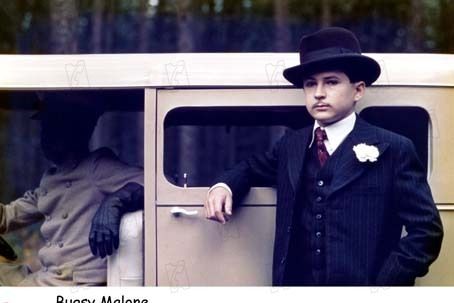
“We could’ve been anything that we wanted to be.” This oft repeated line is not just a song lyric but the whole thesis of Bugsy Malone, Alan Parker’s highly entertaining directorial debut celebrating 50 years of release. Inspired, according to Parker, by stories he would tell his own children based upon recollections of Gangster films he saw growing up, so much of Bugsy Malone feels like spontaneous improvisation. In this otherwise deadly gangster universe guns shoot whipped cream, bombs are custard pies and getaway cars come equipped with bike pedals. Most importantly, its threatening gangsters are played by young children, cosplaying an adult life. A commentary on the nature of child’s play or the futility and inherent childishness of prohibition gang culture? Both are interesting interpretations but I shall choose the former to explore today. As Roger Ebert argued ‘I think the movie has more insights into kids than into gangsters.’ It plays like a film not only acted by children, but written on the fly by children in a playground with a large budget, a mountain of custard pies and an understanding of adulthood bore from stories alone. Bugsy may be culturally outdated to some through the modern eye but still remains a flawless re-creation of recreation and the desire of the young mind to emulate the adulthood it sees or hears about, embellished with the fantastical whimsies of childhood.
The film has all the tropes and trappings of a stereotypical gangster picture. The titular Bugsy (Scott Baio) is a charming boxing promoter who falls for aspiring singer Blousey (Flo Nancarrow) at Fat Sam’s Grand Slam Speakeasy, a name which should come with a cash prize if you can say it without singing it. The eponymous Fat Sam (a show stopping John Cassisi) is in a spot of bother with local gang leader Dandy Dan (Martin Lev) and the newest criminal invention of the splurge gun. As the two groups fight for territory, it seems the only way out is all out warfare, which may drag an unsuspecting Bugsy right into its trap. Meanwhile, established club singer Tallulah (Jodie Foster) is making her own play at Bugsy, which forms deeper and deeper suspicion in Blousey, believing Bugsy may have cracks in his boyish charms. The narrative is stereotypical to its bones, right down to the aspiring tap dancer forced to sweep floors (Albin Humpty Jenkins), but it is all the more charming for it, feeling very true to a story told on the fly from whatever memories were conjured to mind.
Bugsy Malone is the furthest thing from a perfect film, but the most remarkable thing is how much some of its flaws add to the endearment. There is no defending the existence of “Hung Fu Shin Laundry” or some of the uncomfortably revealing clothing on the young flapper girls, but it’s meandering and often disjointed narrative structure that bugged me on first viewing came to be part of its charms on a rewatch. Children at play often do revel in the silliness of situations, or suddenly switch locations, or drastically add a new plot point that throws off the whole narrative. You can map in real time the mind of a child imagining it, which makes its moments of messy Stooges slapstick and its bombastic final act so frightfully entertaining, as the commitment to just making as much ruckus as possible is infectious and so true to a child’s personality.
The film’s success really hinges on the commitment of the child actors, and all do an admirable job. Cassisi is an absolute riot throughout, hysterically funny in almost every scene through his sheer commitment to character. No performance works better in the gag of ‘excited child plays serious criminal’ better than Cassisi’s yells and avid berating of his compatriots and enemies. Baio and Nancarrow play the central straight couple effectively, and Jenkins brings the appropriate pathos and sadness to Fizzy, a man clearly destined for so much more. Foster, in a BAFTA winning role just months after her breakout in Taxi Driver, plays Tallulah in a knowingly sly and slinky way, even if the role would certainly open up a debate today on the ethics of what type of role a child should play even in parodying an adult. Her role does play to an inherent projected maturity that features throughout the film. No one feels like they quite fit their role as an adult would, or fill the costume like an adult would, or deliver their lines like an adult would and yet no compromise is made, much as children want to project the characters they see on TV, the cinema or increasingly today on their devices. The level of brutality and bloodshed would be off the scale if those pies were replaced with real bullets but to children that is it all it is, projected simulation, and so they can play with the boundaries and taboos of a ‘grown up’ genre without facing its realities. How a film like Bugsy Malone would be perceived were it released today is altogether more complex.
With its stage musical adaptation still a regular feature of schools and amateur dramatics societies across the globe, it is clear the success of Bugsy Malone continues to be felt. The original film, though not without falter, continues to be a hilarious novelty with a genius narrative structure that comments on the narratives of the real world, the world of fiction and the world of our own imagination combined to impact the minds of our children. The film does not criticise it, seeming to celebrate and revel in the childhood innocence and excess, but a more conservative reading could definitely note the easy perforations of media violence into child’s play as more uncomfortable viewing. For me Bugsy Malone is ultimately a good hearted musical romp with excellently outlandish child performances and a celebration of improvisational play at a time where it is now more a rarity than ever. Bugsy Malone remains a cry for the art of giving a little love and telling a good story, no matter how skewed or naive.