
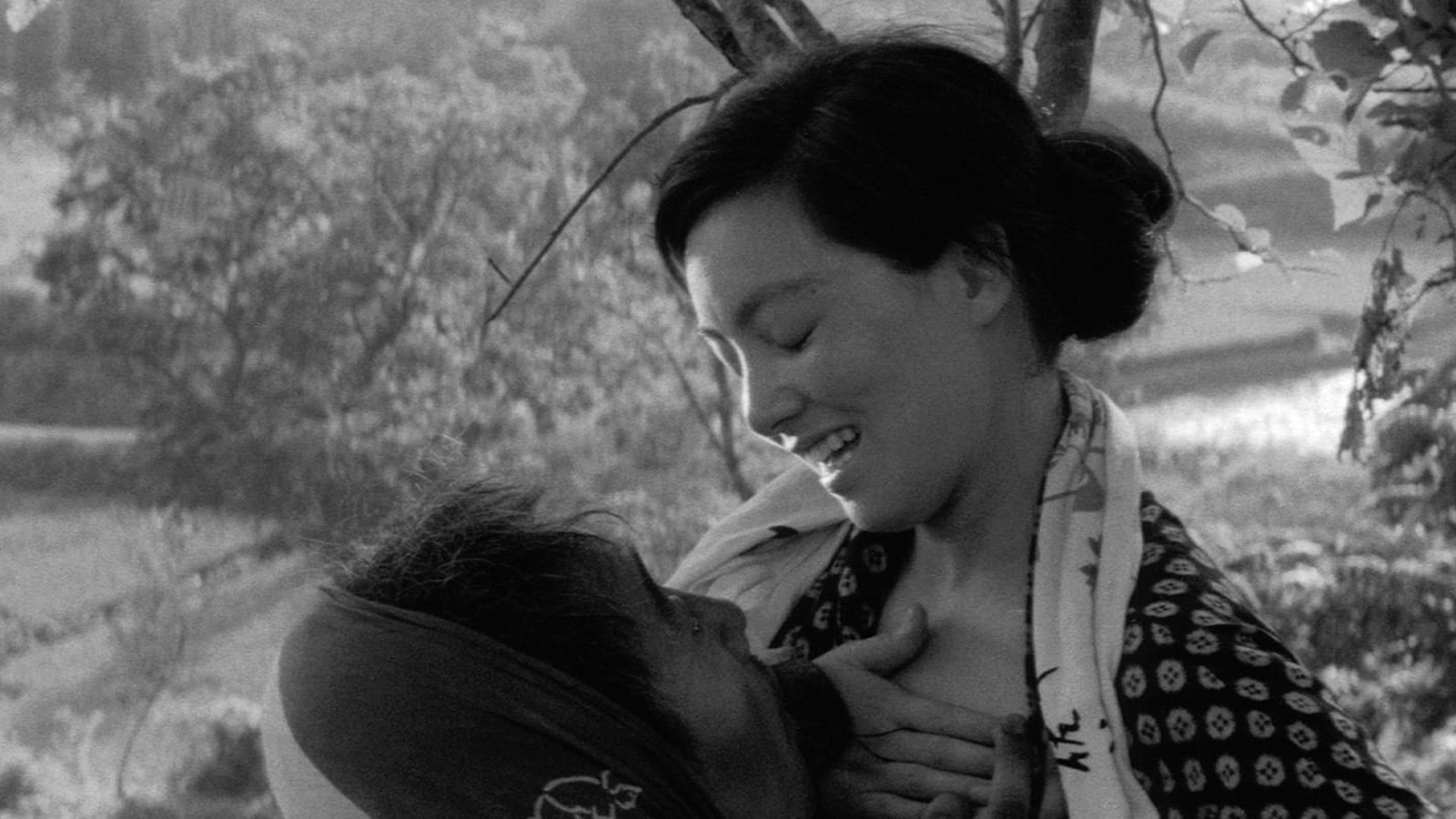
Just over a hundred years ago, in the central Tokyo home of a well-to-do family, a young boy was born who would go on to chronicle the underbelly of Japanese society more thoroughly and movingly than any filmmaker before or since. Shōhei Imamura treated his subjects with anthropological scrutiny, fascinated by how circumstances guide, shape or even determine the course of a human life. The Insect Woman is the portrait of a complex antiheroine, Tomé, from birth to middle age, as she navigates poverty, abuse, misogyny and trauma against the backdrop of a new Japan careening through the twentieth century, dragging its most vulnerable in its wake. Despite the Economic Miracle, and Japan’s secure status today as one of the most prosperous nations in the world, the wide-ranging issues depicted in The Insect Woman (rural and urban poverty; violent misogyny; criminalised, unsafe sex work; police corruption; and a volatile and insecure job market) have not been satisfactorily redressed. Tomé is not an everywoman, but her strife is not yet an historical artefact.
Tomé’s story begins with her birth in a rural Japanese village in deep winter, heated by a single fire and aided by a roving midwife, to uncertain paternity: possibly the developmentally challenged Chuji, with whom she ‘sleeps’ (this troubling ambiguity only deepens as the film progresses) or the coercive Onagawa, whom she witnesses her mother having sex with at five years old as military conscripts parade out of the village. From the outset, Tomé is shaped by a cynical world where human life is not highly valued, and human dignity is valued even less. Women are instantly placed in a position of primacy: the midwife is the first person we see in the film and Tomé’s mother and grandmother are the second and third; even the mountain deity, to whom Chuji has a domestic shrine, is female. But this primacy is not uncomplicated. Onagawa is still able to pressure Tomé’s mother, En, into sex; Chuji tells Tomé she cannot place a doll on the shrine herself due to her gender; and after starting work in a silk mill during the war, she is recalled home under false pretences in order to be sent to work for the landowning family (with an expectation that she should soon marry), something nobody seems to have any qualms over, where she is then raped and impregnated by the landowner’s son. From the start, Imamura is presenting the anthropological conditions that create the type of woman he goes on to depict: not to excuse her behaviour, but to explain it.
Saving her daughter at birth, after it is suggested that they simply let her die due to girls being less desirable and useful than men in poor rural families, moving through multiple jobs in a changing economy, including organising labour, nannying (where her negligence causes the death of a child) and eventually sex work, clawing her way up to becoming the madam of a brothel, Tomé endures more than many far more classically tragic heroines depicted in Japanese cinema, and yet the narrative refuses to treat her as a victim, not out of callousness, but out of respect for her personhood and her multifaceted-ness. She is a product of her circumstances, yes, but she is also responding to them with definite agency, and a will which daunts even the most hardened viewer. Tomé’s woman-eat-woman world is one of constant inversions: the woman for whom she worked and whose child dies ends up working for Tomé’s brothel, unable to find other employment as an ageing mother in a society that still undervalues female labour. When working as a sex worker, Tomé sells her madam out to the police in a scene that is recreated almost shot-for-shot later on, except with Tomé as the betrayed boss. Nobuko, Tomé’s daughter, not only forms a relationship with Chuji similar to Tomé’s, but also falls pregnant by uncertain hand, seemingly destined to repeat the cycle of her matrilineage.
The position of Japan in 2026 seems a far cry from that of The Insect Woman: Sanae Takaichi made history last year by becoming the country’s first female prime minister, education for girls has expanded into the secondary and higher levels, universal health insurance and a strong welfare state protect single mothers largely from the most extreme destitution of the 20th century. But Japan is not a feminist utopia, either. A landmark report by the World Economic Forum this year positioned Japan 117th out of 145 countries surveyed for gender equality, largely due to the underrepresentation of women in parliament and the executive, and the gender pay gap, which sits at around 22% according to OECD figures. Traditional gender norms still persist, with Prime Minister Takaichi saying that she has to work harder than her male counterparts due to the housework she undertakes and makeup she does every day on top of leading the nation. Childcare is still hard to come by in the most densely populated urban districts, with waiting lists growing this year. Sex work continues in organised forms such as soaplands and hostess clubs, with street solicitation leading to the arrest of 140 women in 2023 in the Kabukichō district alone.
If Imamura were to remake The Insect Woman today, Tomé would be born in 1981. It is hard not to imagine what her story would look like growing up in a very different period of Japanese history. How would schooling have affected her trajectory? Would she have been protected from an exploitative family by the state? Would she have still made her way to the sex work districts of modern Tokyo? And where might Japan’s shifting economy take her next? The Insect Woman is a snapshot of Japan’s tumultuous modernisation, but it is also a lens through which we can examine the continuing plight of women in a nation where tradition is highly valued and poverty is often concealed. Imamura’s socially conscious yet extraordinarily human filmmaking can be felt still across Japan’s modern cinematic landscape, one of the richest threads in what is perhaps the most striking filmic tapestry in the world.
The Lower Depths: The Cinema of Shōhei Imamura runs at the Institute of Contemporary Arts until 13 December.