Wicker at first glance seems to be a humorous take on a B-movie sex comedy, as evident by its marketing tools, desires (nay, demands) for a shirtless Wicker Husband cutout, and even the self-aware promotional campaigns by IKEA. But in truth, it is so much more – it is a tale of moral greed, envy and a parable on what marital obligations are and should be, all wrapped up in a fairytale quality that would make Angela Carter fume for not having written this story herself.
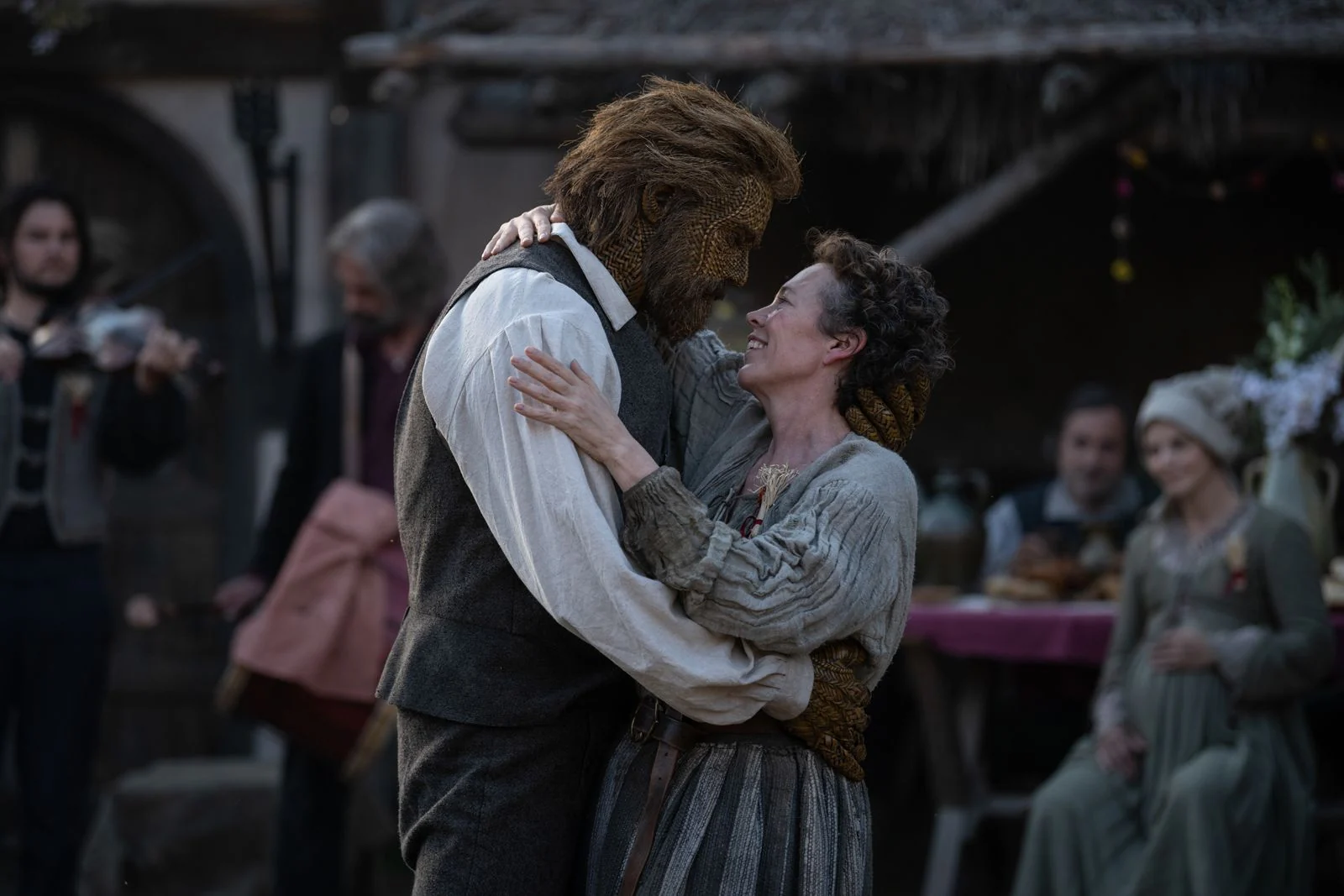
The film explores an unnamed village where inhabitants’ names mark the obligations between both genders very evidently- women are known by their husband’s occupations. That is, save for one – The Fisherwoman (played by Olivia Colman in top shape), a spinster bearing the brunt of the village’s taunts for her status, particularly from the Tailor’s wife (Elizabeth Debicki in a softer yet highly dangerous turn of a Queen Bee archetype). Fed up, she commissions the voluntarily semi-outcast weaver (Peter Dinklage) to make her a husband. What she doesn’t expect is for the Wicker Husband (Alexander Skarsgård in a practical handmade suit) to operate as flesh and bone despite his woody exterior, and for their marriage to become the talk (and envy) of the village.
What makes Wicker an absolute must watch is the ensemble that brings it to life – Colman and Skarsgård bring a natural chemistry as the newlyweds, calling to mind Katharine Hepburn and Spencer Tracy in Adam’s Rib (1949), with a modern take on the “marriage of convenience” trope. The “chorus” ensemble brings a zaniness that matches the finesse of the former, be it from the likewise newlywed Bottlewashers to the horny Bakers. Meanwhile, Dinklage impeccably blends film and stage with his perfectly-timed soliloquies. Behind the camera, writer-directing duo (and real-life married couple) Alex Huston Fischer and Eleanor Wilson adapt Ursula Wills’ 2006 short story, and utilise Renátó Cseh’s production design, Lol Crawley’s cinematographic talents and Anna Meredith’s folksy score to create something utterly unique and well-fitted for a modern audience. While the film at some points teeters between a horror and a comedy, it earns its stripes as a “genre” film, and a lovely nod to silent cinema with intertitles.
Wicker is a rare and boldly forward piece of conversations regarding what gender dynamics have been and should be, blending the universality of themes in Shakespearean works, the rage and power-central arcs of female protagonists in Angela Carter’s fairytale stories and the once-in-an-era satire rarely found in comedy movies (see Dr. Strangelove, Broadcast News, and The Apartment) that encapsulate the zeitgeist of their respective releases. I wouldn’t be surprised if some of its sharp-edged dialogue makes its way into conversation in the coming years – I’ve already used “lick my worm” for those who rate this film under two stars.
Wicker is in UK cinemas now.